
How do I prepare for appointment?
Author: Kelsey Zhao | Reviewer: James Milligan | Published: 19 March 2025 | Updated: ~
Appointments with PCPs are often short in time. This guide offers recommendations to help make the most of your appointment. Most PCPs do not have many patients with SCI and are not familiar with SCI-related health care needs. Although people with SCI should not be responsible for educating others on SCI, being on top of your own needs is important. Becoming an expert in your own health can help you work with your PCP as a team and keep you healthy.
Write down what you want to address in the appointment
Current health concerns
. Gather information to try and understand the problem, what may be causing it, and possible solutions

Questions
you have about your health or potential treatments/therapies
Prescriptions
that need to be refilled
Forms and referrals
that need to be filled out and signed. For referrals to programs, check that you meet the eligibility requirements. If a referral letter is required, it may speed things along to present an initial draft of the letter to your PCP.
It is possible that all you concerns cannot be addressed in a single appointment. Set priorities by keeping in mind which concerns you want addressed as soon as possible and which ones can wait for another appointment.
Bring up to date medical and health information
Make sure your PCP is up to date on your medical history. For your own records, it can be helpful to keep a folder for your personal medical and health information. This could be a physical folder or a digital one. These records may include:
- A health journal: Keep a journal of ongoing health concerns, the symptoms you are experiencing, and your day-to-day activities. This gives your doctor more information to better understand and address the issue (for example, if you are experiencing persistent urinary tract infections, a bladder journal might help you find the root cause). The SCI Health Toolkit App is a free, easy-to-use tool designed to help you track and monitor health changes, and walk you through health checks.
- Medications: Note the name of the medication, the dose and when a refill is needed. Free apps like the Medisafe App can help you keep track of your medications.
- Other treatments or supplements: Include any over-the-counter medication, vitamins, and natural remedies that you are taking. Note any alternative medicine treatments you are using.
- Tests screenings: Keep track of routine tests/screening and when the next one should be scheduled. Keep a record of test results and imaging results if available.
Accessibility
If this is your first appointment with your PCP since your injury, you may need to phone or visit their office to ask about accessibility.
Building accessibility
- Accessible parking
- Accessible routes into and throughout the building
- Automatic power doorways
Medical equipment accessibility
- Adjustable height accessible exam table
- Transfer and lift equipment
- Wheelchair accessible scales
Scheduling flexibility
- Appointments later in the day
- Appointments scheduled around other health-related commitments like physiotherapy or a bowel routine.
- Longer appointments to accommodate complex health issues, transfers, skin inspections etc.
- Virtual or telephone appointments for certain concerns.
Physical Exams
There are many screenings, tests, and checks that require an in-person procedure where your body is examined by looking, feeling, using medical tools, or taking a sample of cells. You may also be required to transfer for the procedure. Being prepared and informed for these procedures can make your experience safer and more comfortable. Some tips to keep in mind:
Equipment for exams
- If accessible equipment like an adjustable exam table is not available, bring a caregiver, friend, or family who can help you transfer safely and stay at the side of the table to prevent falls.
- If accessible equipment is required for the procedure, you or your PCP may need to reach out to get the procedure done at another clinic or hospital that has the equipment.
Health complications during exams
- Before starting, have a conversation with your PCP about issues that might come up during the procedure and how to address them.
- For people with an injury above T6, a procedure below the injury can trigger autonomic dysreflexia (AD). Inform your PCP about the triggers, symptoms and how to manage your AD. Consider measuring blood pressure before and after the procedure to monitor for AD.
- Depending on your bowel and bladder dysfunction, accidents may happen during procedures. Empty the bowel bladder before an exam of the pelvic region and let your PCP know if you may have an accident during the procedure.
- If you experience muscle spasms that could affect the procedure, discuss triggers and how to manage spasticity with your PCP.
If a physical exam is not necessary, virtual appointments and phone appointments with your PCP may be a suitable option.
Refer to our articles on Autonomic Dysreflexia, Urinary Tract Infections, and Spasticity for more information!
Practical Tips
-
- Ask if a note can be added to your profile about physical disability and use of mobility aid(s) so that staff knows to book you in an accessible exam room.
- Make sure everyone who provides health care to you sends notes, images, and results to your PCP, who is responsible for coordinating your care.
- Be aware of other services in the community (such as labs, imaging centres, and specialist offices) that have accessible equipment.
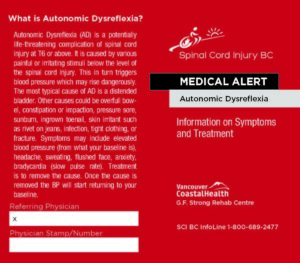
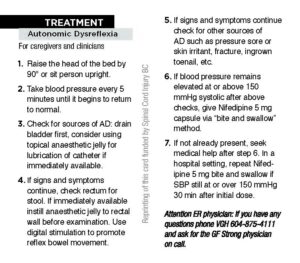
- Wallet cards are small cards available for free that provide basic information on common SCI complications: autonomic dysreflexia, urinary tract infections, and pressure injuries. Keep them on you to give to your PCP at an appointment or to first responders and paramedics in an emergency. Wallet cards can be printed at home or mailed from livingwithsci.ca/wallet-information-cards.
- Request a “standing order” for laboratory tests done often like bloodwork and urine tests so that you don’t need to make an appointment every time.
- Request clean empty urine containers for when you need to test for urinary tract infection. You may need to explain to your PCP that urinary tract infections are common for people with SCI.
| People with SCI have a higher risk for antibiotic resistance. Avoid using antibiotics to prevent UTI or to treat unspecific symptoms that could be caused by something else. Inappropriate use of antibiotics can lead to infections with antibiotic resistant bacteria, that cannot be treated with common medications. |

During the appointment
- Take notes or ask if you can record the appointment so you do not have to worry about remembering everything your PCP says and follow up with tasks as needed.
- Ask questions or ask for more information if you are unsure or don’t understand something.
- If you are nervous, bring a caregiver/friend/family member who can help take notes and help advocate for your needs.
Reach out to other people with SCI/peer support programs
Attending peer programs or calling a help line run by SCI organizations can connect you with someone who can help you prepare for the appointment. Often, another person with SCI will have had similar health issues and can provide advice on how to address it with your PCP. There may also be people or programs that can help you prepare documents or do research.