What medical treatments are available for men?
Author: SCIRE Community Team | Reviewers: Lesley Houle , Rachel Nicoletti | Published: 12 June 2018 | Updated: ~
Erectile dysfunction medications
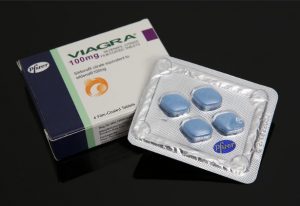
Sildenafil (Viagra).15
Several medications are used to treat erectile dysfunction after SCI. The most common medications are called Phosphodiesterase 5 inhibitors (PDE5i), such as Sildenafil (Viagra), Vardenafil (Levitra), and Tadalafil (Cialis). These medications work by opening the blood vessels and increasing blood flow in the penis. This helps maintain an erection during sexual activity.
There is strong evidence that phosphodiesterase 5 inhibitors are safe and effective for treating erectile dysfunction after SCI. In general, men who are able to have reflex erections respond better to these medications.
Injectable erectile dysfunction medications
Medications that are injected through a small needle directly into the penis (called intracavernosal injections) are another common treatment. The most common medication used is Alprostadil (Caverject). The needle injects the medication into the sides of the penis to allow the blood vessels of the penis to relax and fill up with blood.
There is moderate evidence that injectable medications are effective for treating erectile dysfunction following SCI. However, there may be an increased risk of priapism, a prolonged erection that can cause damage to the penis.
Vacuum devices
Vacuum devices (sometimes called ‘pumps’) are a non-drug treatment option for getting an erection. With these devices, the penis is inserted into a cylindrical device, where a handheld pump creates a vacuum by drawing air out of the cylindrical device. This causes a change in pressure that draws blood into the penis to cause an erection.
Penile (penis) rings may help to maintain an erection from a vacuum device. A ring can be placed around the base of the penis to limit blood flow away from the penis and keeping it firm. Care should be taken when using these devices and they should not be left on for more than 30 minutes because they can cause tissue damage, especially if there is reduced sensation.
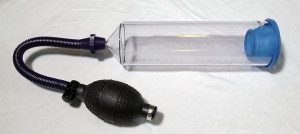
Vacuum devices are a non-invasive method to treat erectile dysfunction.16
Vacuum devices are commonly used for managing erectile dysfunction after SCI, as they are non-invasive and non-drug treatment options. They may also assist with maintaining a person’s ability to have an erection over time. There is weak evidence that vacuum devices and penile rings are effective to assist with the treatment of erectile dysfunction after SCI. However, it is important that these devices are medically approved and used carefully.
Surgical implants ( Penile prostheses )
Surgical implants to the penis, also known as penile prostheses, are a permanent surgical procedure that involves inserting a flexible or inflatable implant into the areas of the penis that would normally become firm during an erection. They will then remain in place, holding the penis erect. Inflatable prostheses can be inflated to fill up only when needed.
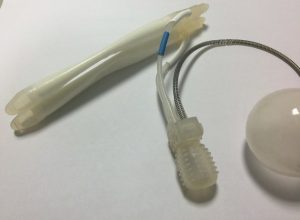
Penile prostheses are a permanent method to treat erectile dysfunction.17
Implants are typically only used if other treatments fail because they are permanent and once implanted, other methods will not work. There is weak evidence that surgical implants may be effective for improving erectile dysfunction after SCI.
Pelvic floor exercises ( Perineal muscle training )
The pelvic floor muscles (also called the perineal muscles) are a group of muscles which are located in the pelvic region. They support the internal organs from below and play a role in bladder, bowel, and sexual function. There is weak evidence that pelvic floor exercise may help improve erectile dysfunction in men with SCI who retain some ability to control these muscles.
Vibration
Vibration sensation applied to the penis from a commercial mechanical vibrator, such as the FertiCare device, may assist men with SCI in achieving ejaculation. This is sometimes called vibrostimulation, and is a frequently used technique to obtain sperm for fertility. There is weak evidence that vibration may assist with ejaculation in men with injuries above T10. These devices may also be used for sexual pleasure by some men.
Electroejaculation

Electroejaculation
is another procedure which can be used for ejaculation to collect sperm. This procedure involves the insertion of an electrical probe into the rectum, which is placed close to the prostate gland and seminal vesicles. Electrical currents are then used to stimulate the nerves to cause a reflex ejaculation. There is weak evidence that this treatment can cause ejaculation in men that are unable to ejaculate through vibrostimulation.
Experimental treatments for improving sensation and pleasure
There are a few experimental treatments that have shown promise in improving sexual sensation following SCI that are not currently available for treatment.
An experimental microsurgery procedure where nerves in the groin were connected to those from the penis has been shown to improve sensation of the penis in some individuals with SCI.
Sensory substitution training is an experimental technique in which stroking motions of the penis were connected to stroking of the tongue, so that the brain would be able to use the intact sense to substitute for one that is lost. In one study, this type of training improved sexual pleasure in men with SCI.