
How can stem cells be used for SCI?
Author: Sharon Jang , Vanessa Mok | Reviewer: Peggy Assinck | Published: 13 May 2020 | Updated: ~
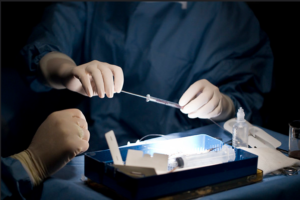
Healthcare professionals preparing for a stem cell transplant.18
With SCI, stem cells could theoretically be used to replace injured or destroyed nerve cells or protect further attack by the immune system around the injury site. The main goal of stem cell therapy for SCI is to improve the conduction of information past the injury. As of yet, there are no stem cell treatments that can reverse or repair a SCI. While there is some thought that stem cells may be used to help recovery, researchers are still currently unsure of exactly how stem cells/cell transplantation can help recovery from a spinal cord injury. However, many hypotheses have been made:
Neuroprotection
: Stem cells may help prevent further damage to the tissue in the area surrounding a spinal cord injury. By limiting the amount of damage, more function may be saved.
Supporting the host cell: Stem cells may help enhance the survival of nearby cells by secreting molecules that control
inflammation
and/or improve the regeneration of blood cells
Creating new blood vessels: Stem cells may help promote faster regrowth of new blood vessels and protection of the existing ones. Having more blood vessels may increase the amount of oxygen and nutrients available for surviving cells.
Regrowth of
axons
: Stem cells may help axons regrow through developing bridges across the site of the lesion and decreasing scars. However, it is important to note that the regeneration of axons may not always lead to functional benefits and could even lead to adverse effects such as increased pain.
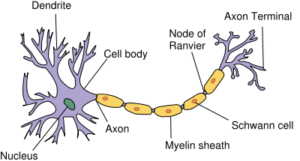
The anatomy of a neuron.19
Regeneration of
myelin
: Myelin forms insulation around nerves, allowing electrical signals to transmit efficiently to other nerve cells. Stem cells may also be used to replace the support cells that wrap myelin around nerves.
