
Who can use a manual wheelchair?
Author: Sharon Jang | Reviewer: Emma M. Smith | Published: 3 March 2020 | Updated: ~
Manual wheelchairs are wheelchairs that are propelled by the user or pushed by another person. They do not have a battery or other power source.
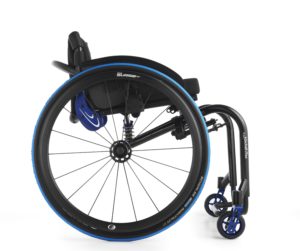
For the most part, manual wheelchairs are used by people who have enough muscle control and strength in their arms to propel the wheelchair forward on their own. For people with SCI, this typically means that a person needs to at least have function of the biceps (the muscle that bends the elbow), which is intact for people with complete injuries at C5 and below. However, it can be difficult to propel a wheelchair for individuals with C5 and C6 injuries, so only some individuals with these types of injuries will be able to do so. Use of a manual wheelchair is more common in people with control of the triceps (the muscle that straightens the elbow), which is intact in people with complete injuries at C7 and below. In some cases, a manual wheelchair can be pushed by another person or propelled using the legs.
As a bridge between the more common manual and power wheelchairs, power-assist add-ons combine features of manual and power wheelchairs to provide greater assistance for those who need it. Additionally, non-powered propulsion assist add-ons may also be used to facilitate wheeling. Propulsion assist options are available for manual wheelchairs and come in several different styles. The use of powered add-ons has been reported to improve efficiency and to reduce strain on the cardiovascular system. The following article will focus on manual wheelchairs that are propelled with the arms.
