
What causes pressure injury?
Author: SCIRE Community Team | Reviewer: Susan Andrews | Published: 3 November 2017 | Updated: ~
Pressure injuries happen because of many different factors from both inside and outside the body. There are a number of changes to the body after SCI that make pressure injuries more likely. These factors, combined with forces like pressure, friction, and shear, can cause pressure injury.
Pressure
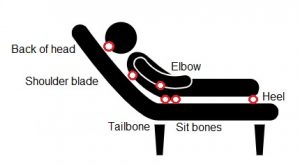
Certain areas of the skin become more vulnerable to pressure depending on the body position.3
Pressure injuries usually form on weight-bearing areas of the body that are in contact with supporting surfaces. This usually happens when sitting or lying in the same position for a long time or when positioned on a surface that does not support the weight properly (such as a hard chair).
Pressure usually happens in specific areas depending on the position, but most often affects the sit bones (ischial tuberosities), tailbone (sacrum and coccyx), heels, backs of the knees, elbows, back of the head, and shoulder blades.
Too much pressure can prevent blood from reaching the area, which is important for bringing oxygen and nutrients to the tissues. This can lead to skin damage or breakdown. Skin breakdown can happen quite quickly (in even 30 to 60 minutes) on a hard surface without changing positions regularly.
Friction and shear
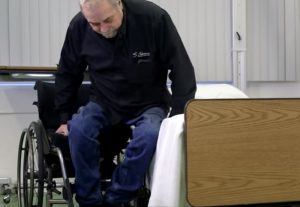
The skin can experience friction and shear during wheelchair transfers.4
Pressure injuries can also be caused by friction and shear. Friction can happen when the skin is rubbed on a course surface, such as sitting on an uneven wrinkle of clothing or rough surface. This can cause injury to the surface of the skin which can lead to skin breakdown.
Shear is a type of force where the skin goes one way and the body goes the opposite direction. This usually happens when the skin is caught on a surface while the body is moved. For example, when transferring in bed, the skin might be pulled along the bed while the person shifts positions, which causes shear. Shear strains and injures the tissues close to the bone.
Most pressure injuries result from combinations of pressure, friction, and shear that happen in the deep tissues close to the bone. This leads to deep tissue injury, rather than injury on the skin’s surface.
There are many other factors from both inside and outside the body after SCI that make pressure injuries more likely to develop.
Other factors that contribute to pressure injuries
Changes to the skin
Spinal cord injury can affect the skin in various ways. The skin below the injury may become less elastic and weaker as a result of tissue changes caused by the SCI. In addition, people with injuries above T6 lose the ability to sweat below the injury, which means that body temperature is not regulated very well.
Loss of sensation
Sensation is important because it allows us to recognize discomfort and provides a cue to change position regularly. When sensation is reduced or absent, these cues are not present and we may sit in an uncomfortable position where there is too much pressure for too long.
Loss of movement
Loss of movement also contributes to pressure injuries. People with reduced movement often use a wheelchair as their main method of mobility, which may lead to long periods of sitting in one position. It may also be more difficulty to reposition in sitting or lying so pressure may be placed in one area for too long. As well, when the muscles are not used regularly, they shrink (called muscle atrophy), which means there is less padding between the skin and bone.
Hear Peter speak about his difficulties with not having sensation to his elbows.
Moisture
Moisture makes the skin more vulnerable to injury and bacteria. Moisture may be present because of bladder or bowel problems after an SCI or in warm and humid climates.
Body weight
Changes to body weight, either being too thin or overweight, can increase the risk of pressure injuries. When a person is underweight, there is less padding between the skin and bone. When a person is overweight, the body is heavier, which creates more pressure in weight-bearing and can also make transfers more difficult, which may result in more shearing and friction.
Supporting surfaces
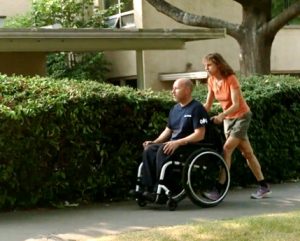
The characteristics of surfaces that support the body in regular positions are very important for distributing pressure. This includes wheelchair cushions, mattresses, couch cushions, car seats, commode or toilet seats, sports equipment, and any other surface that is regularly used for supporting the body. Hard or unsupportive surfaces can contribute to developing pressure injuries. It is important to also consider surfaces in unfamiliar settings, such as when travelling or when a hospital visit is needed. Airplane seats and hospital stretchers do not often provide enough protection for your skin following SCI and you may need a lightweight travel cushion when travelling or to request a specialized surface if you need to visit a hospital.
Other factors:
- Reduced ability to fight infections (reduced immune function)
- Other medical conditions like infections, blood clots, spasticity and contractures
- Poor nutrition (especially if there is not enough calories or protein)
- Reduced physical activity
- Smoking
- Long periods of bed rest
- The sit bones (ischial tuberosities) may become flatter over time
- Higher level of injury and complete SCI
- Depression
- Reduced ability to perform behaviours that reduce risk, such as regular pressure relief, good skin care, and skin inspections
