
What should I expect after my pregnancy?
Author: Hannah Goodings | Reviewer: Frédérique Courtois | Published: 11 September 2023 | Updated: ~
After giving birth, most women with SCI have longer stays in hospitals compared to able-bodied women. This allows for continued care of bladder emptying, birthing wounds and monitoring. After discharge from the hospital, some complications that you may face as a mother with SCI include:
Wound Healing
Due to decreased or complete lack of sensation, birthing wounds for SCI patients must be carefully inspected often to ensure they are healing properly. Women may stay in the hospital to get the care needed or they may head home if wound care can be safely continued there. Daily wound cleaning should be completed until healing is complete. If possible, visits from a midwife or nurse may be beneficial during this time.
Breastfeeding
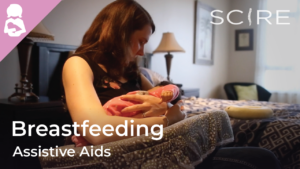
Watch SCIRE’s video explaining ways you can breastfeed with assistive aids.
Mothers with SCI often have the ability to breastfeed normally.
However, you may face some complications depending on your level of injury. Women with:
- injuries above T6 tend to have reduced milk production,
- injuries above T4 can experience trouble releasing milk due to reduced sensation of the baby latching onto the breast,
- any level of injury may have trouble positioning the baby or holding the baby for the entirety of feeding times. In these cases, breastfeeding pillows or laying down while feeding may be a good option.
If it is determined that the baby is not getting enough to eat through breastfeeding alone, supplemental formula may be advised.
Mental Health
Following delivery, many women, both able-bodied and disabled, deal with mental health changes and some develop postpartum depression or anxiety. Individuals living with SCIs are at a higher risk of depression, leading to a higher rate of postpartum depression and anxiety.
Postpartum Depression
Postpartum depression can be described by a major episode of depression occurring within 12 months of giving birth. Following delivery, many women experience postpartum blues, associated with mood swings during the first 4-10 days. An important difference is that postpartum depression greatly affects activities of daily living and postpartum blues does not.
Postpartum Anxiety
Postpartum anxiety is a major episode of anxiety during the months following giving birth and is also thought to be a more common risk in SCI populations.
Both postpartum depression and postpartum anxiety can have negative effects on the mother, child and supporting family if not treated. If you know someone suffering from either of these conditions, encouraging them to seek help from a medical professional as soon as possible is crucial.
