
What are the stages of pressure injuries?
Author: SCIRE Community Team | Reviewer: Susan Andrews | Published: 3 November 2017 | Updated: ~
Pressure injuries are classified by how severe they are as “stages” of injury. These stages can range from just a small amount of redness on the skin to a wound that travels all the way down to the bone. Determining which stage a pressure injury is can help you and your health team to measure the extent of wounds and figure out how to treat it.
Stages of Pressure Injury ( National Pressure Injury Advisory Panel ) 2
| Stage 1 | 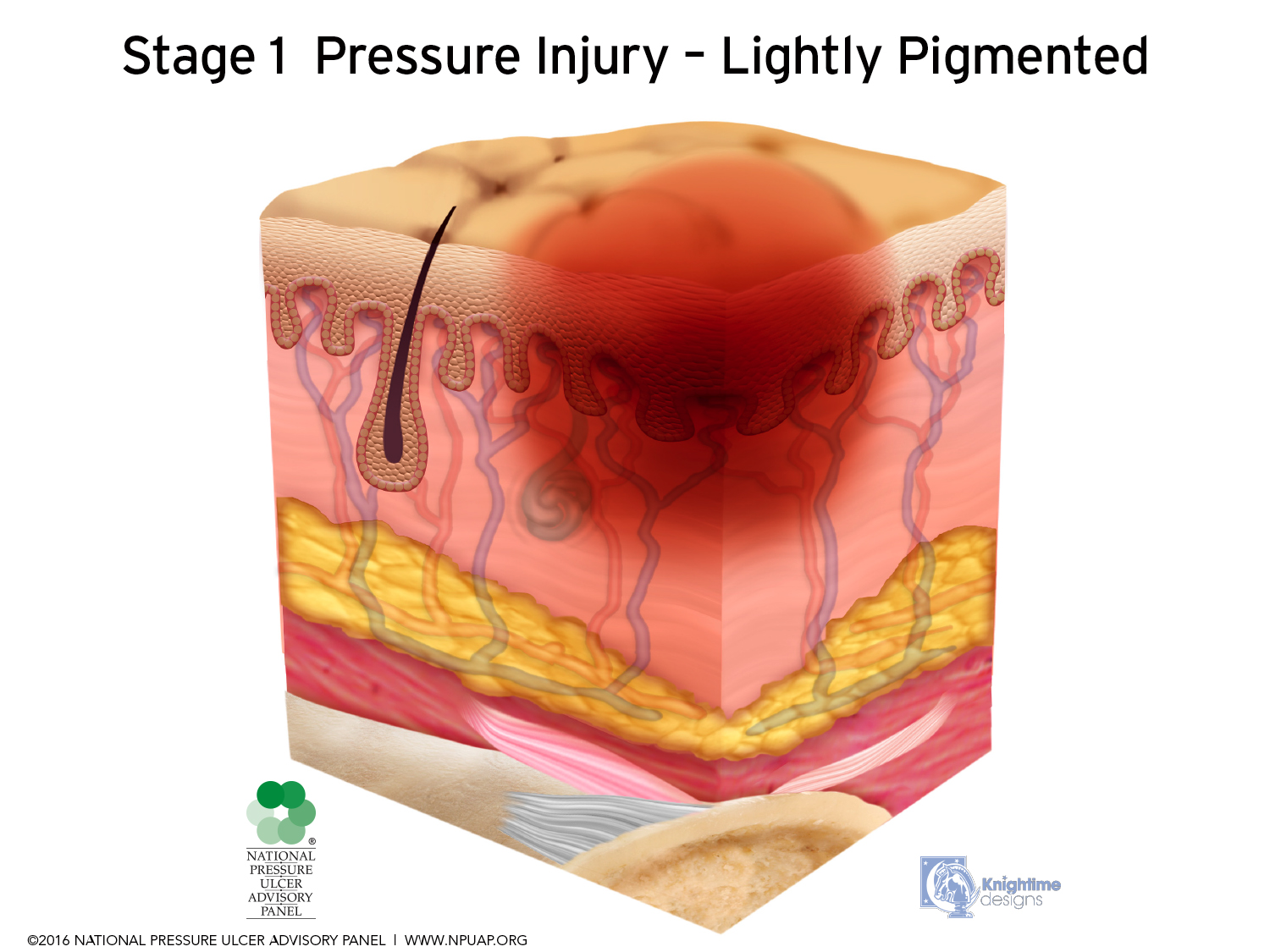 |
The skin is intact with an area of redness that does not go away after being off of it for 20 to 30 minutes. |
| Stage 2 | 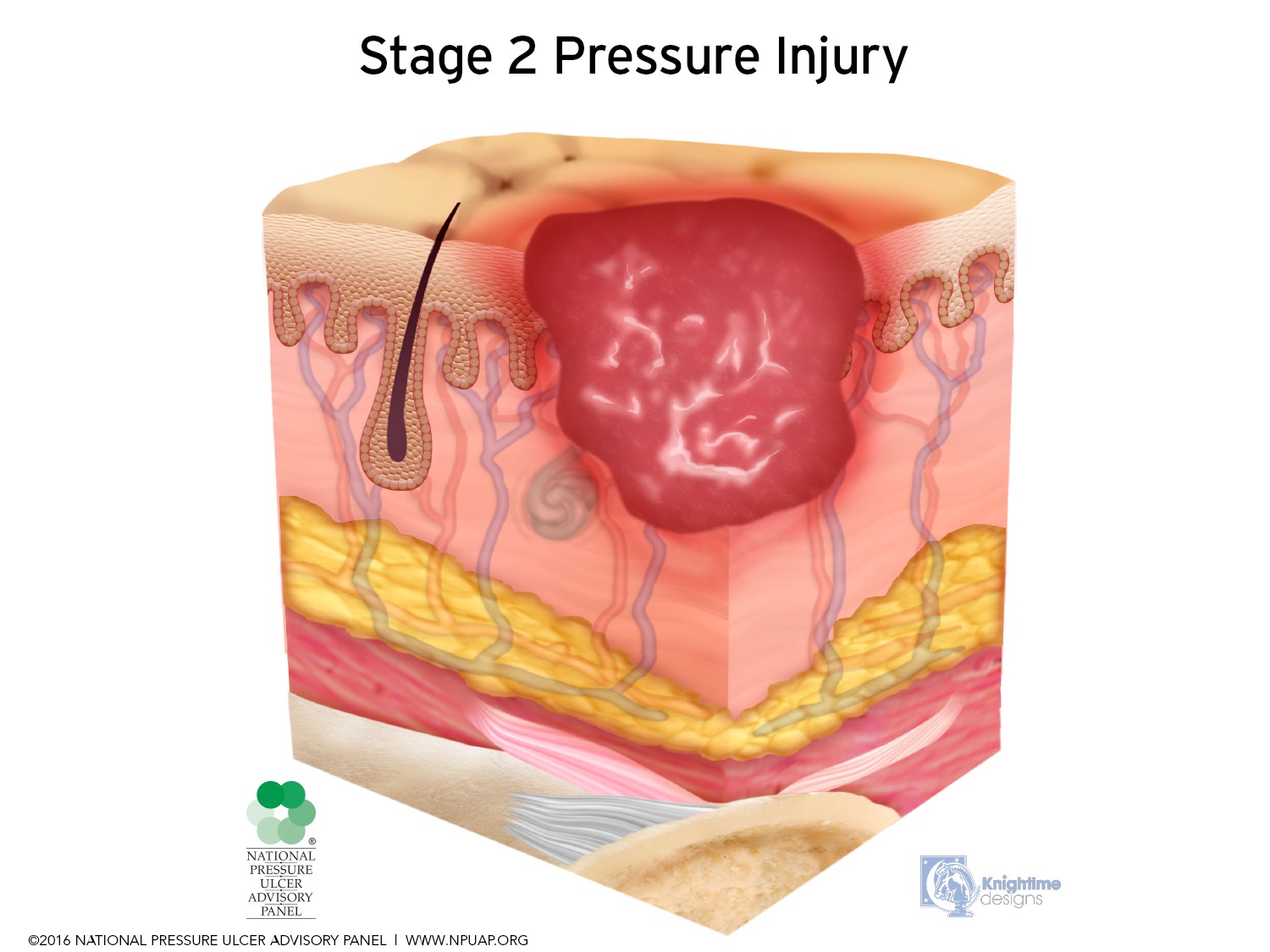 |
There is a partially open wound that is the thickness of the skin (shallow) and typically red-pink in colour. |
| Stage 3 | There is a full skin thickness opening (deeper than skin level) that has a mostly red or pink base with no bone or tendon visible. Minimal slough or it is called unstageable. | |
| Stage 4 | 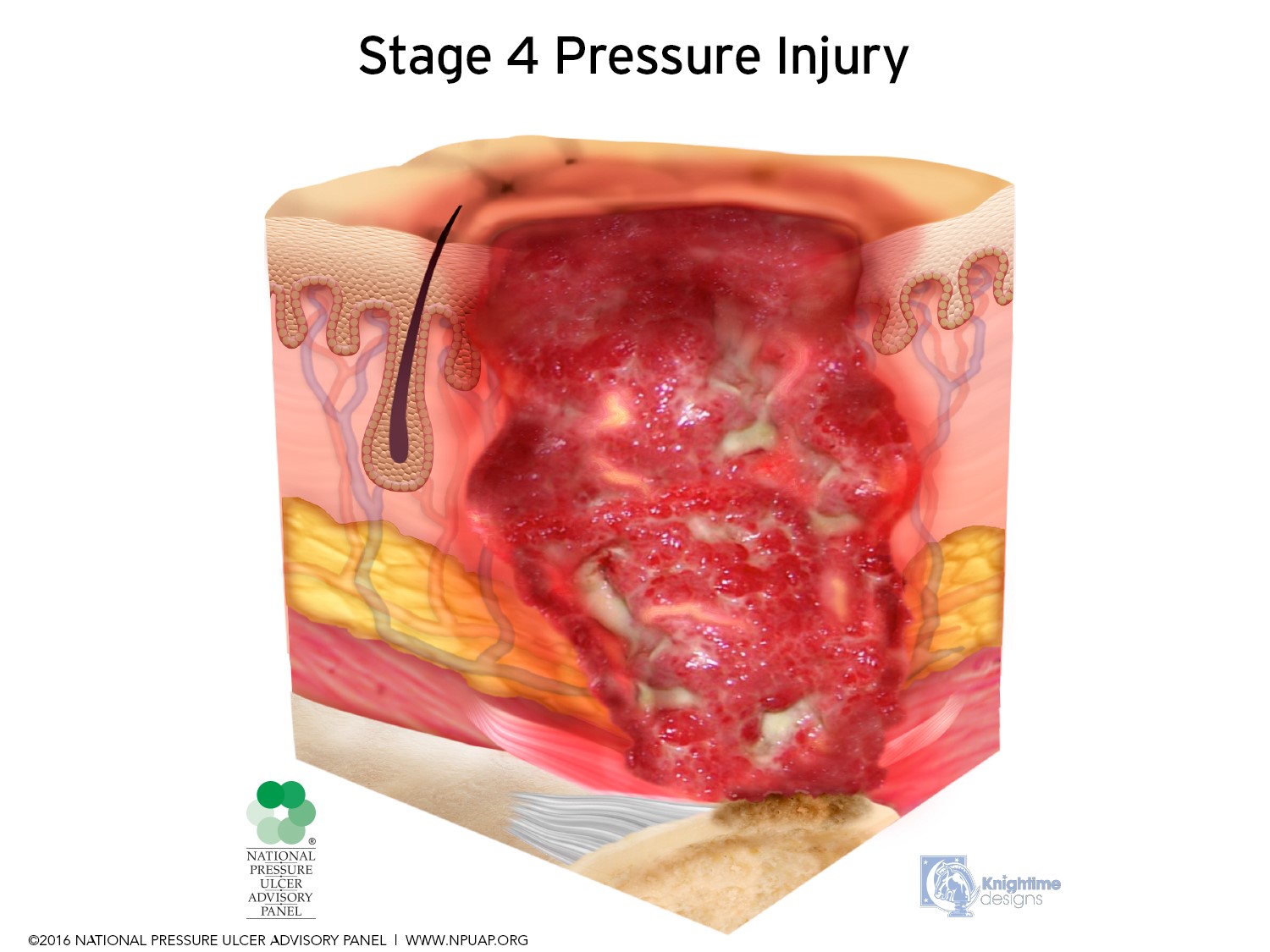 |
Full thickness skin opening which includes exposed bone, tendon and muscle and possibly slough. Both Stage 3 and 4 wounds may have tunnels or open areas that run under the skin. |
| Unstageable | 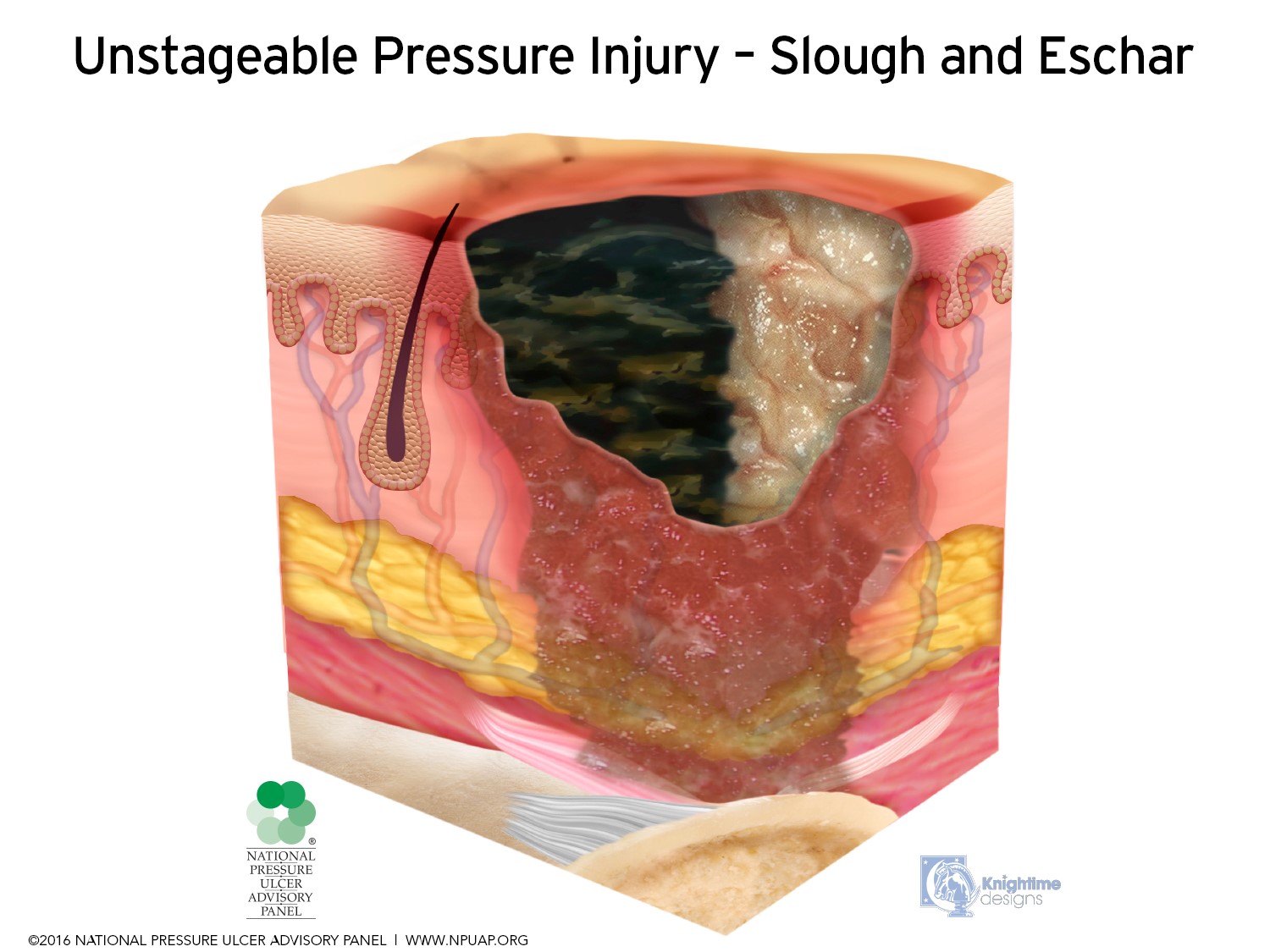 |
A wound that is covered with slough or black skin so it not open and the base of it cannot be seen. This type of sore is impossible to stage. |
| Deep tissue injury | 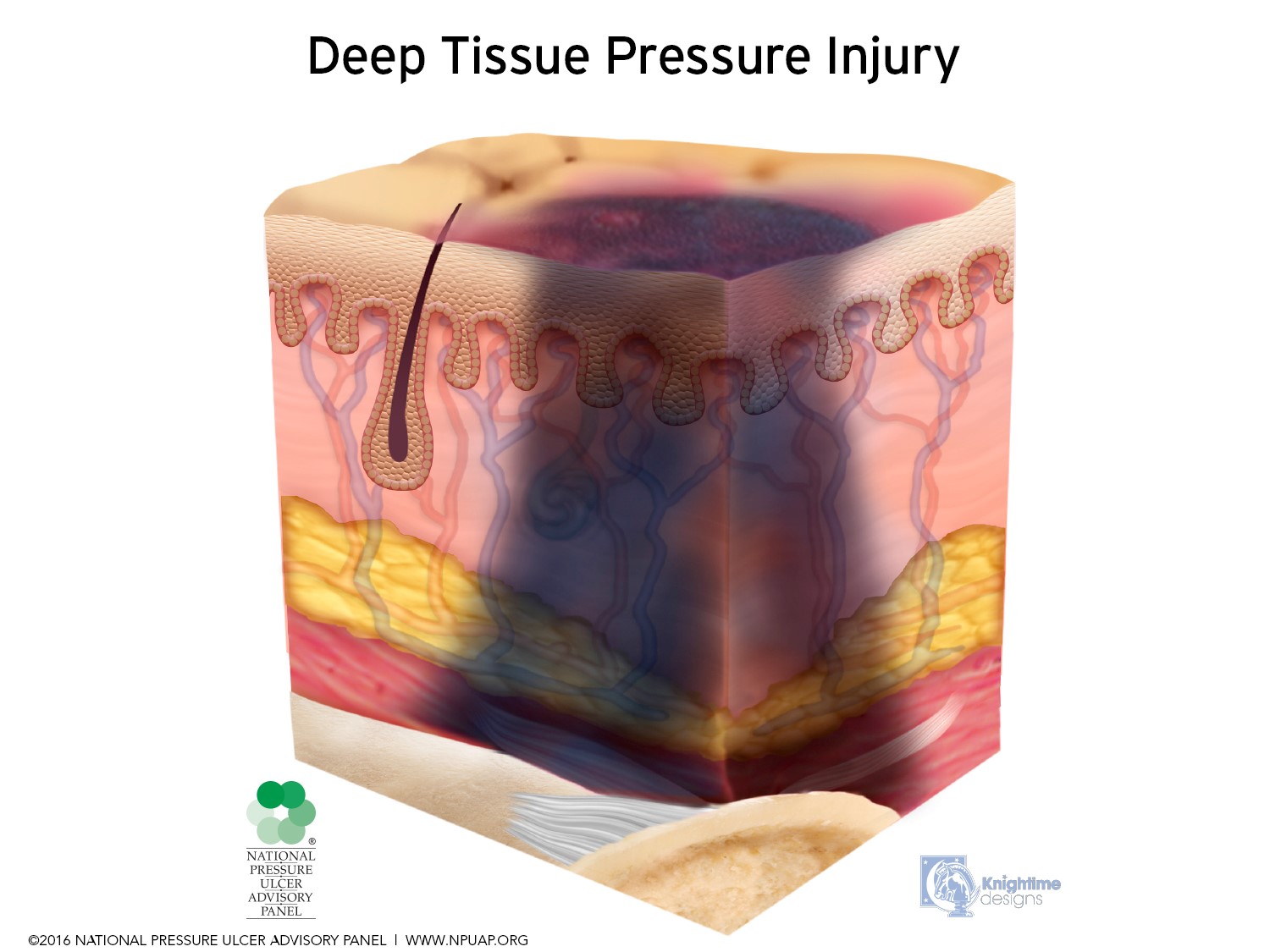 |
A wound that is dark purple or a blood filled blister. If the cause is addressed quickly these injuries can resolve without tissue loss but they can also develop into stage 4 pressure injuries depending on the extent of injury to the tissues. |