
What happens to the respiratory system after SCI?
Author: Sharon Jang | Reviewers: Phillip Popovich , Katherine Mifflin | Published: 2 September 2020 | Updated: 10 January 2025
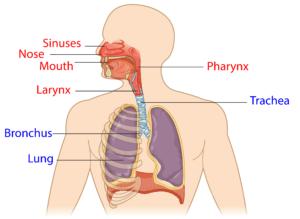
The upper respiratory system (red) and lower respiratory system (blue).1
The respiratory system involves the lungs, and is responsible for breathing, coughing, and speaking. It consists of the upper respiratory tract (nose, mouth, and the throat (pharynx)), and the lower respiratory tract (voice box (larynx), airways (windpipe or trachea), and lungs). Breathing and coughing both depend on various muscles in the chest and neck. Changes to respiratory function after SCI depend on the level of injury and completeness of the injury. After SCI, especially high cervical level injury, some muscles required for breathing may be affected. These include:
- The diaphragm, which is the main muscle that pulls air into the lungs,
- The abdominal muscles, which helps to expel air from the lungs and produce a forceful cough, and
- The muscles in between your ribs (intercostal muscles), which help squeeze air out of the lungs.
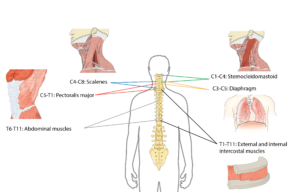
The muscles used to breathe are mostly controlled by the upper parts of the spine.2
As a result, sustaining a higher-level injury may result in impaired respiratory function. Some of these changes include:
- A reduction in the amount of air you are able to breathe,
- A stiffer lung, making it difficult to take a full, deep breath,
- A weak or ineffective cough,
- An increased amount of mucus, and
- Difficulties with swallowing.
Despite these changes, many technologies and techniques are available that can assist with breathing and coughing. Moreover, the greatest amount of air you are able to blow out after taking your biggest breath in increases over time from injury.