
What are the risks and side effects of using urinary catheters?
Author: SCIRE Community Team | Reviewer: Bonnie Nybo | Published: 24 October 2017 | Updated: ~
Although use of urinary catheters is the standard of care for managing bladder emptying after SCI, there are risks and side effects that may be related to the use of catheters. This is not a complete list. Speak to your health provider for further information.
Risks and side effects of urinary catheterization may include:
Pain and discomfort
Inconvenience
Indwelling catheters may limit a person’s movement and activities
Indwelling catheters may be considered embarrassing
Damage to the urethra from insertion of catheter or irritation from excess movement of indwelling catheter
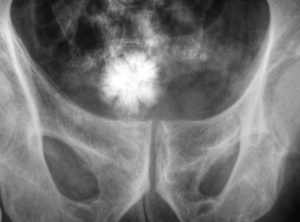
X-ray of a large bladder stone8
If used improperly (not regularly enough), damage to the kidneys can happen when bladder overfilling or bladder pressures causes urine reflux back up to the kidneys
Allergic reaction to the catheter material (often latex)
Bladder stones (crystallization of minerals in the urine from poor bladder emptying, indwelling catheters and unclean catheterization technique)
Urinary tract infections (from unclean catheter technique and incomplete bladder emptying)
Bladder cancer is associated with long term use of catheterization
Some of the risks associated with using urinary catheters can result from improper use, such as using improper or unclean technique or waiting too long between catheterizations. It is important that you discuss your bladder routine with a knowledgeable health provider to determine the best schedule for you and to learn to use the equipment correctly.