
Does accessibility impact quality of life?
Author: Kelsey Zhao | Reviewer: Rachel Abel | Published: 26 February 2025 | Updated: ~
Since community involvement and access to services is so important to QoL for people with SCI, access to the community environment can have a big effect on health and QoL. Many of the factors that hinder access can be improved by changing policies, practices, and the physical environment.
Community Access
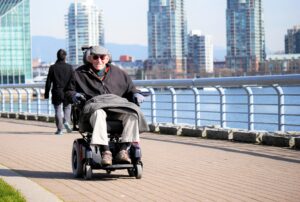
Although accessibility features are required in many public places, what is accessible for one person may not be for another. The environment outside and inside can still be inaccessible to people with SCI for many reasons. Things like unmaintained sidewalks; physical barriers in parks, beaches, and swimming pools; a lack of adjustable equipment in a health care centre; and obstacles inside and outside of buildings, can prevent people with SCI from participating in the community and accessing health care. This lack of access to community spaces and resources can have a negative impact on QoL.
Housing Access
Not having suitable housing with adaptations for SCI can have a negative impact on QoL. Living in a home that hinders one’s ability to do daily activities or participate in activities can be very stressful. The inaccessible homes of family and friends can also affect QoL.
Read our article on Housing After SCI for more information!
Transportation Access
A lack of accessible transportation can lower QoL by blocking access to community resources, health care, and activities, especially for people in living in rural or remote areas. Owning a private adapted vehicle may be too expensive, not suited to one’s particular needs, or not available in the area. Public transportation like buses and trains are not always available or equipped to accommodate people with SCI.
Read our article on Adapted Driving for more information!
