
How is spasticity diagnosed?
Author: SCIRE Community Team | Reviewer: Holly Timms , Felicia Wong | Published: 21 November 2017 | Updated: ~
The main way that spasticity is diagnosed and monitored is through a physical examination. Your health providers will talk to you about your symptoms, functional abilities, and current treatment plan, look at your muscles and posture, and test the muscles in various ways. This may include:
Hands-on tests where the joints are moved slowly and quickly
Active tests of strength and movement
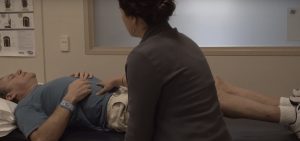
Your health provider may perform a physical exam to help determine your need for spasticity treatment.6
Testing your reflexes
Your health providers may also observe tasks like walking, transferring, and eating – this can help them understand how spasticity affects you in your everyday life.
Health providers often use special collections of questions and tests called outcome measures, which help them accurately keep track of changes in spasticity. Spasticity may change over time so regular check-ins with your health team, especially while figuring out what works best for you, are often an important part of managing your spasticity.