
How are pressure injuries treated?
Author: SCIRE Community Team | Reviewer: Susan Andrews | Published: 3 November 2017 | Updated: ~
There are a number of different treatments for pressure injuries. Treatments may be used to reduce pressure or shearing to the wound, keep the wound clean and protected to reduce the risk of infection, and aid circulation and healing. Treatment for pressure sores is the responsibility of the whole health team, so you may work with many different professionals.
Dressings
Wound dressings help to protect the wound, absorb drainage from the wound, and prevent bacteria from entering while also allowing it to breathe. There are many different types of dressings that may be used for pressure sores. Your nurse will help to decide which dressings to use and how often they need to be changed.
Medications
Antibiotics are used as needed to treat infections in the soft tissues or when
osteomyelitis
(bone infection) is present. Topical antimicrobial treatments are sometimes applied to the wound to reduce bacteria to try to prevent infection and support healing.
Energy-based therapies
A number of different energy-based therapies may also be used to treat pressure injuries. These treatments are done to help increase circulation, kill bacteria, and promote healing.
Electrical stimulation
Electrical stimulation may be applied to pressure injuries through electrodes connected to a small device. Studies suggest that electrical stimulation works to help with healing of severe wounds (stage 3 and 4) after SCI.
Ultraviolet C light
Ultraviolet C light may be applied to a wound using special light bulbs and equipment. Ultraviolet C light has antibacterial effects on wounds. Research suggests that Ultraviolet C is effective for helping treat pressure injuries after SCI.
Debridement
Debridement is a method of removing dead tissue and debris from wounds. There are several methods used to debride wounds and your wound care nurse or physician will choose the method that is right for you. Types of debridement may include:
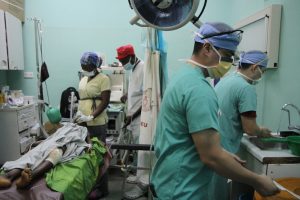
Debridement promotes healing by removing unhealthy tissue from the wound.15
Surgical debridement by a surgeon under anesthesia
Sharp debridement
using sterile scissors performed by a wound care nurse
Maggot therapy
, which involves using maggots to selectively remove only the dead tissue
Enzymatic debridement
, which involves using enzymes to help dissolve the dead tissue
Autolytic debridement
, when moisture is added to the wound as needed to help the dead tissue debride from the wound
Debridement is only needed if there is slough or unhealthy yellow black tissue in the wound base and should only be done when there is enough circulation for healing to occur.
Flap reconstruction surgery
Surgery may be an option if the wound does not improve with other treatments. This is typically only used for stage 3 or stage 4 injuries. The procedure for closing these wounds is called flap reconstruction surgery. Flap reconstruction involves removing the wound and surrounding tissue and covering it with other nearby tissues, such as muscles and skin. After this type of surgery, careful procedures must be followed before you can get up and moving safely.
Amputation
Amputation may sometimes be necessary if a wound gets severely infected and the infection moves into nearby tissues. This is more commonly seen in legs and feet.
Negative pressure treatments
Negative pressure wound treatments involve the use of a vacuum which applies suction to a wound that is covered with a wound dressing. This helps to manage drainage and increase circulation. A negative pressure dressing should only be used when the wound is clean and pink healthy tissue and when the cause of the pressure injury has been addressed.
Other pressure injury treatments
There are many other medical, alternative, and physical treatments that may be used in the treatment of pressure injuries. Speak to your wound care team about any treatments you are considering trying.
