
How does non-traumatic SCI present?
Author: Dominik Zbogar, Kelsey Zhao | Reviewer: Peter New | Published: 17 September 2024 | Updated: ~
The onset of NTSCI may be slow and gradual and be related to a progressive condition or a complication from another medical event. Onset can range from minutes to months depending on the cause of injury.
Compared to traumatic SCI, those with NTSCI:
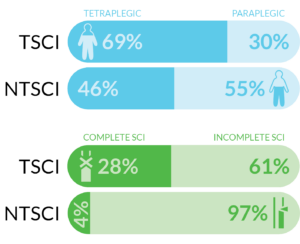
TSCI = traumatic spinal cord injury; NTSCI = non-traumatic spinal cord injury
- are more likely to have paraplegia
- are more likely to have an incomplete injury
- spend less time in rehabilitation and have reduced hospital charges
- have similar discharge destinations.
“Invisible” disability
Compared to people with traumatic SCI, people with NTSCI are more likely to have regained some walking ability when they are discharged from rehabilitation. People with SCI who can walk may face unique physical and psychosocial challenges. The use of mobility devices for walking likes canes and walkers might cause more fatigue and/or pain then a wheelchair. The absence of a wheelchair as a clear indicator of disability can result in misunderstanding and judgement from others due to lack of awareness about people with SCI who can walk. Some feel that they exist in a “grey zone” where they are neither fully abled nor disabled and experience “invisible” challenges.
Some examples of challenges include:
- Misunderstanding from others about the severity of their injury and the impairments they live with.
- Feeling out of place in SCI programs or in the SCI community, especially when the program or space is not built with people who can walk in mind (e.g., no places to sit).
- Unwanted attention and scrutiny when in public or in social situations due to an abnormal gait or assistive devices.
- Lack of empathy from others when they pass as not disabled (e.g., “Can you hurry up? Why are you so slow?”).
There is a need for more programs and services that are welcoming to and consider the needs of people with SCI who can walk. If you or someone you know is struggling with finding community and services as a person with SCI who can walk, it can be helpful to talk to health professionals or peers with similar injuries and experiences. Peer support has been proven to improve adjustment to life after injury and general wellbeing through social/emotional support and sharing knowledge. If pain or fatigue with walking are a problem, it may also be beneficial to consider the intermittent use of wheeled mobility devices.
Read our article on SCI Basics for more information about types of SCI!