
How do you choose the right foods?
Authors: Vanessa Mok , Dominik Zbogar | Reviewers: Janet Parker , Gita Joshi | Published: 23 December 2019 | Updated: ~
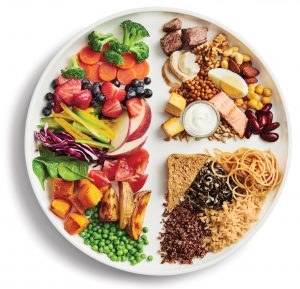
The main way to increase fibre is to make vegetables, fruit, whole grains, and plant-based protein foods the cornerstone of your diet, as per Canada’s Food Guide.
Eating a whole food plant-based diet to meet your fibre needs instead of supplements is preferred as whole foods provide nutritional benefits that fibre supplements do not. Indeed, studies which reduced the risk of disease with fibre used food and not supplements. It is not clear if fibre from supplements brings similar benefits. However, there may be situations where a fibre supplement is the best solution.
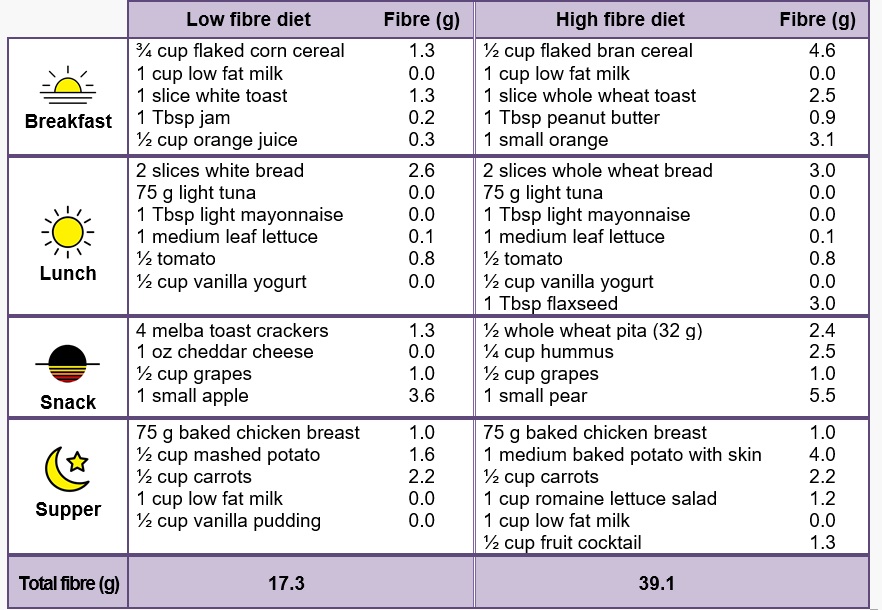
Below is an example from Dietitians of Canada of how a low fibre diet can be modified into a high fibre diet.
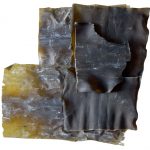
Kombu seaweed.22
Other simple ways to increase fibre in your diet include:
Choose whole fruit over fruit juices
Try a fruit or vegetable you’ve never heard of
Avoid peeling vegetables and fruits where appropriate
Add legumes such as lentils, beans, and peas to soups, salads, and other dishes
Add seaweed to soup
Switch white for 100% % whole grain bread, pasta and rice
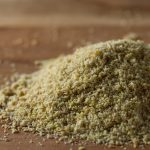
Ground flax seed.23
Eat nuts and seeds as snacks or toppings to salads
Use whole grain flour when baking
Add ground flax seed to your morning oatmeal or smoothie
Read food nutrition labels and choose foods containing more fibre
Calculating the percent daily value for fibre
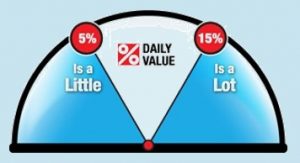
The % Daily Value is found on the nutrition facts label on the packaging of many food products.25
The percent daily value (% DV) is a guideline to help you make informed food choices.
According to Canada’s Food Guide, food with 5% DV or less per serving size is considered little of a nutrient. On the other hand, food with 15% DV or more per serving size is considered a lot of a nutrient. To help reach the recommended amount of fibre in your diet, aim for food containing 15% DV or greater.
In Canada, the DV of fibre is 25 g/day. The box of crackers in the picture indicates that each serving size provides 2 g of fibre. The % DV would be calculated to be (2 g ÷ 25 g) x 100 = 8% DV.
