
How does aging affect physical activity after SCI?
Author: Sharon Jang | Reviewer: Sonja de Groot | Published: 20 April 2022 | Updated: XX October 2024
Benefits of physical activity as you age
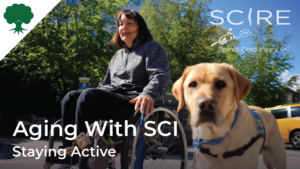
Watch SCIRE’s video explaining to learn about ways to stay active as you age.20
It is normal as you age for the function of body systems and organs to gradually decline. People with SCI and other disabilities may find that this process starts earlier in life and has a bigger impact on daily function. Physical activity is important to keep your body and mind healthy. Physical activity can help someone aging with SCI prevent and slow down losses in function, independence, and quality of life. Small changes in muscle strength, heart health, breathing, or pain can have big impacts on the daily activities of someone with SCI. Physical activity can also be a good way to socialize if you are able to join a community group or program.
Physical activity can help keep your body healthy in many ways:
- Improve or maintain muscle strength
- Improve or maintain mobility
- Improve respiratory fitness
- Improve blood circulation
- Reduce risk of heart health problems
- Improve bone health and prevent osteoporosis
- Improve your overall mood and wellbeing
- Improve body composition (increase muscle, reduce unhealthy fat)
- Boost the immune system
- Improve chronic shoulder pain with strengthening and stretching
- Reduce fatigue
Refer to the “What are the benefits of exercise after SCI?” section above for more information.
Risks and considerations
While physical activity is essential to maintaining health as you age, the impacts of aging on your body may also increase your risk for injury. These risks should be considered when doing physical activity, especially because problems like pain, fractures, pulled muscles, and strains can hinder participation.
Be aware of:
- Pain that may be an indication of injury.
- Increased risk of fractures due to bone loss (people with SCI are at high risk for osteoporosis).
- Joint degeneration and injury in the shoulders and wrist (people with SCI develop overuse injury with age and have more arthritis and breakdown in the joints).
- Skin breakdown and pressure injury from motions that cause friction during physical activity (skin becomes more thin and less elastic with age and heals more slowly from injury).
How to know when to stop
Many people with SCI live with a baseline level of pain. This can make it difficult to determine whether discomfort and pain while doing physical activity is acceptable or harmful. Expert advice includes starting small and taking note of any discomfort/pain before, during, and after physical activity.
- If physical activity is not causing additional discomfort or pain that persists afterwards, you can maintain or make a small increase to the intensity and/or amount of physical activity.
- If physical activity is causing additional pain that persists afterwards, consider changing the type, or reducing the intensity and/or amount of physical activity.
Adaptations
You may need to adjust your physical activity routines and methods as you age to keep it safe and accessible. Consult your physiotherapist for advice on how to safely do physical activity based on your unique abilities and barriers.
Some possible adaptations:
- Changing the type of physical activity you do
- Slower-paced sports
- Less weight-bearing activities to accommodate injuries or arthritis
- Hobbies that get you moving
- People often get tired more quickly as they age. Start with shorter periods of less intense activity and increase gradually in small increments
- Opportunities to do PA at home (online classes, walking the dog, gardening, etc.)
- Opportunities in the community
- Check with local organizations for online and in-person PA programs
- Equipment and technology to facilitate PA
- Lift or transfer technology to get onto workout equipment
- Work with a trainer/coach who is knowledgeable about SCI
Can medication make you tired?
Some medications used to treat pain or spasticity may cause fatigue, reducing your motivation to be physically active. If you are concerned about the effects of your medication on energy levels, consult with your healthcare provider to see if there are opportunities to optimize your regimen.