
What are the roles of the health providers in acute care?
Authors: SCIRE Community Team | Reviewer: Arlene Aspinall and Tova Plashkes | Published: 17 February 2017 | Updated: ~
The health care team is made up of a number of health professionals with different areas of expertise. The team works together with the person and their family to meet their treatment goals.
Emergency medical responders (Paramedics or Emergency medical technicians)
arrive at the site of an injury in an ambulance. They provide emergency treatment and supervise transport of the person to the hospital.
Emergency physicians
are medical doctors who work in the emergency department and specialize in treating medical emergencies when they first arrive at the hospital. They are responsible for the first medical assessment, directing early care, and referring to other specialists and professionals.
Physiatrists
(Physical medicine and rehabilitation physicians)
are medical doctors who specialize in rehabilitation. Physiatrists work on the medical care of people with spinal cord injuries and their rehabilitation. They are also consulted to help determine if a person is suitable to attend rehabilitation.

Specialist physicians
may be consulted for various conditions and specialty treatments related to spinal cord injury. These might include General Surgeons, Neurologists (nervous system), Urologists (urinary system), Plastic Surgeons (restoration or reconstruction surgery), Orthopaedic Surgeons (bone, muscle, and joint surgery), and Neurosurgeons (nerve and brain surgery).
Nurses
provide direct care or consultation to patients across all aspects of health care. Nurses work on many aspects of care after spinal cord injury, including taking care of patients’ day-to-day needs, pain management, bowel and bladder routines, wound management, sexual health, and skin care.
Nurse practitioners
are nurses with additional training who have expanded or specialized roles in medical care.
Pharmacists
specialize in medication management. They prepare and dispense medications and provide consultation to patients and other professionals about medication use.
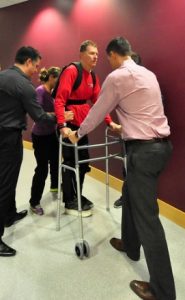
Physiotherapists (Physical therapists, PTs)
specialize in helping people improve their movement and function. Physiotherapists work with people with spinal cord injuries on developing strength and movement, mobility skills like transfers and walking, and in other areas like prescribing mobility devices and treating wounds and pain.
Occupational therapists
(OTs)
specialize in helping people to meet their goals for daily living and functional activities. Occupational therapists work with people with spinal cord injuries on developing skills for daily tasks like bathing, dressing, and eating. They also assess the safety and accessibility of living spaces and prescribe equipment like wheelchairs and braces.
Speech-language pathologists (SLPs)
specialize in speech, swallowing, language, and communication. Speech-language pathologists work with people with spinal cord injuries on improving speech and swallowing, dealing with problems associated with breathing assistance like mechanical ventilation and tracheostomies, and developing communication skills.
Therapy assistants (Rehabilitation Assistants, Physical Therapy Assistants, Occupational Therapy Assistants, Speech-Language Assistants)
work under the supervision of physical therapists, occupational therapists, and speech-language pathologists to assist with the person’s rehabilitation plan. A therapy assistant may work on tasks like assisting a person to sit in a chair, practice self-care skills, or practice swallowing or communication skills after a tracheostomy is removed.
Respiratory therapists (RTs)
specialize in the treatment of conditions related to the
cardiopulmonary system
(the heart and lungs). Respiratory therapists are involved with treatments related to oxygen, suctioning, mechanical ventilation, and other treatments in North America. Physiotherapists fulfill this role in other parts of the world.
Social workers
specialize in assisting people to improve their social wellness. Social workers provide support and counselling to assist with coping and recovery from their spinal cord injury, counselling about resources in the community, and planning for care after the hospital.

Psychologists
are health professionals who specialize in mental health and treating mental disorders. Psychologists provide assessment, counselling, and therapy for mental disorders and support for problems related to coping and adjustment.
Dieticians
specialize in nutrition and diet. Dieticians may be involved in determining nutritional needs, meal planning, and education about changes to diet.
Spiritual care professionals (Chaplains)
provide counselling related to spiritual, emotional, and religious support.
