
How do the sex organs work?
Author: SCIRE Community Team | Reviewers: Lesley Houle , Rachel Nicoletti | Published: 12 June 2018 | Updated: ~
To help understand changes to sexual function after SCI, it can be helpful to understand how the sex organs work when the spinal cord is not injured.
The male reproductive system
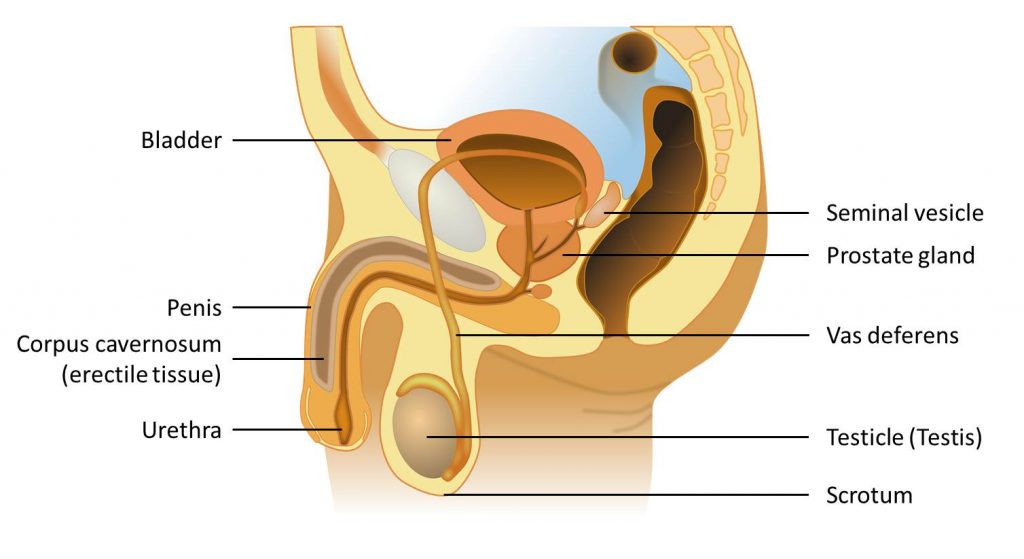
The male reproductive system.3
The testicles (testes) are the main male sex glands, located within a sac called the scrotum underneath the penis. The testes create sperm and hormones, which then travel through connecting tubes towards the penis. The prostate gland and seminal vesicles are glands that make fluids that mix with sperm to make semen.
The penis is a shaft that has several columns of spongy tissue. These tissues contain blood vessels that can fill up with blood to make the penis firmer (an erection). The urethra is a tube that travels through the prostate gland and penis to expel semen during ejaculation. It also passes urine from the bladder.
The female reproductive system
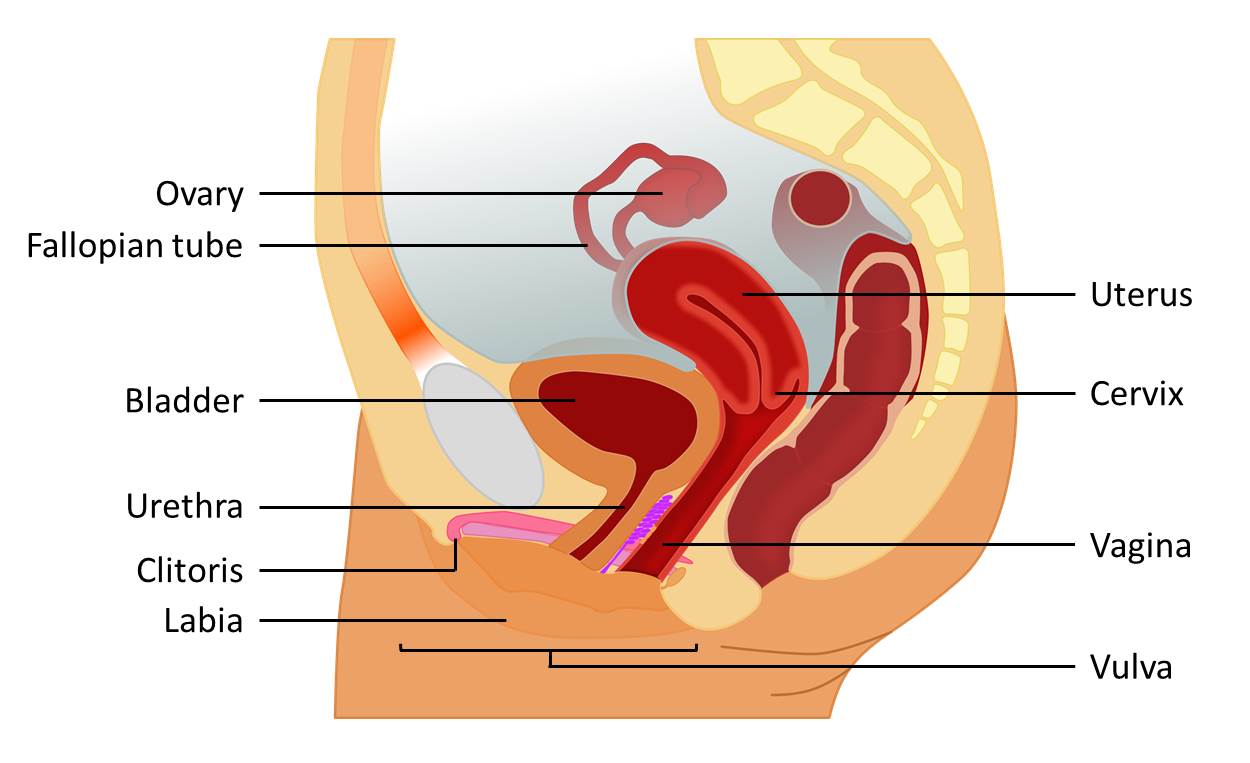
The female reproductive system.4
The ovaries are the main female sex glands. They are located within the abdomen and produce egg cells. The Fallopian tubes connect the ovaries to the uterus. The uterus (or womb) is where fertilized eggs develop into a fetus. It connects below to the inner part of the vagina through the cervix (the ‘neck’ of the uterus).
The vagina then extends from the cervix to the outside of the pelvis (the vulva), which is surrounded by the inner and outer vaginal lips (the labia). The opening to the urethra, where urine is expelled, is between the opening to the vagina and the clitoris.The clitoris is a small, button-like organ which is sensitive to sexual touch. It is located at the top of the inner labia above the urethra and opening to the vagina.
Sexual arousal
Sexual arousal describes how the mind and body become sexually excited and prepare the body for sex. In men, sexual arousal causes increased circulation to the penis, which fills the spongy tissues with blood and causes an erection. In women, sexual arousal involves developing lubrication in the vagina and increased circulation to the vagina and clitoris.
Sexual arousal happens in two ways
Sexual arousal happens in response to sexual thought or touch. These two ways of getting aroused have different pathways through the nervous system.
Arousal from thoughts (
Psychogenic arousal
)
Becoming aroused by sexual thoughts is called psychogenic arousal (‘psychogenic’ means ‘originating in the mind’). This type of arousal happens when a person sees, hears, or imagines something sexual. This causes nerve signals from the brain to travel down the spinal cord and through nerves in the thoracic and lumbar spinal cord (from T11 to L2) to the sex organs.
Arousal from touch (Reflex arousal)
When arousal happens in response to sexual touch, it is called reflex arousal. Sexual touch causes nerve signals to travel to the spinal cord and back without travelling to the brain first. This leads to automatic (reflex) arousal of the sex organs. Reflex arousal involves nerves in the sacral spinal cord (from S2 to S4).
Orgasm

Orgasm
is the peak of sexual excitement. It involves a sudden release of sexual tension caused by sexual activity, which is accompanied by rhythmic movement of muscles in the pelvis and feelings of pleasure.
In men, orgasm is often accompanied by ejaculation. Ejaculation involves coordinated movements along the reproductive glands and tubes that send semen out of the penis. The muscles at the neck of the bladder also close to prevent semen from accidentally entering the bladder. In women, orgasm is accompanied by rhythmic muscle tensing in the vagina and uterus.
