
Who gets non-traumatic SCI?
Author: Dominik Zbogar, Kelsey Zhao | Reviewer: Peter New | Published: 17 September 2024 | Updated: ~
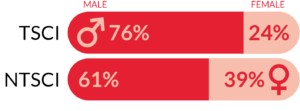
TSCI = traumatic spinal cord injury; NTSCI = non-traumatic spinal cord injury
Although NTSCI still affects males more overall, the proportion of females with NTSCI is higher relative to traumatic SCI. NTSCI is also more likely to affect older people.
The numbers by cause
The incidence of NTSCIs varies depending on the cause and the health services in the country where you live. Although there are many gaps in the research data, existing studies provide an idea how different NTSCI causes are distributed.
Congenital & Genetic
- In the few studies that recorded cases of congenital causes of NTSCI, spina bifida and other congenital conditions cause between 1 to 6% of cases. Overall, congenital and genetic NTSCI make up a very small proportion of NTSCI.
Acquired
- Malignant and benign tumours are common causes of NTSCI globally. Studies from all over the world since 1975 report that tumours are the cause of 14-44% of NTSCI cases
- Degenerative conditions of the spine are a very common cause of NTSCI in high-income developed countries. The percentage of NTSCI cases caused by degenerative conditions ranges from 13 to 62%. Many of these conditions become more prevalent with age.
- In the regions of Sub-Saharan Africa and South Asia, tuberculosis has been reported to cause 15 to 30 % of NTSCI cases. Tuberculosis is an infectious disease caused by bacteria that typically attacks the lungs but can also damage other parts of the body like the spine and brain.
- Other causes of NTSCI commonly reported in research include inflammatory/auto-immune conditions, vascular conditions, and infections.
Pediatric SCITraumatic injury is the most common cause of SCI in adults, while non-traumatic causes are more common in children. The most common non-traumatic causes of pediatric SCI include congenital anomalies, spinal cord tumors, infections, and vascular malformations. Common traumatic causes of pediatric SCIs include motor vehicle accidents, falls, sports-related injuries and iatrogenic harm. Visit SCIRE Professional for more information on Pediatric SCI. |
Where in the World?
An estimated 20.6 million individuals live with SCI globally. It appears that the incidence of NTSCI is increasing due to the ageing population in many countries. Indeed, in some countries the incidence of NTSCI is now higher than that of traumatic SCI.
There is a general lack of information about incidence and types of NTSCI worldwide. That said, developed countries tend to have a higher proportion of cases caused by degenerative conditions (32%) and from tumours (25%) in Western Europe. Developing countries, in comparison, tend to have a higher proportion of NTSCI acquired from infection, particularly tuberculosis and HIV, though tumours are also reported as a major cause. There are many gaps in tracking the global rates of NTSCI.