
What other powered mobility devices are there?
Author: Sharon Jang | Reviewer: Emma M. Smith | Published: 4 March 2020 | Updated: ~
While the majority of people who use wheeled mobility devices after SCI will use a manual or power wheelchair, other devices are also sometimes used.
Scooters
Scooters are powered devices that are typically used for getting around in the community. They come in a variety of sizes and in 3 wheeled and 4 wheeled designs. They are often used by individuals whose functional abilities do not require a full-time wheelchair, but may need support when moving around in the community. This support may help a person move greater distances, conserve energy, or get around safely if they have impaired balance, pain, or fatigue. Scooters are typically larger devices compared to wheelchairs, and are controlled by hand controls similar to a bike or motorcycle. They are usually cheaper than power wheelchairs but do not have as small a turning radius and also cannot facilitate complex seating systems. Due to their longer length, they are also more difficult to accommodate in wheelchair taxis or vans.
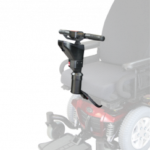
Additionally, there are tiller-like devices that can be added on to powered wheelchairs. This allows powered wheelchair users to operate their device similarly to a scooter. An example of this device is the JoyBar.
Segways
Segways are powered, self-balancing two-wheeled devices with arm bars that a person can stand on to move around in the community. While Segways are not intended specifically to be a rehabilitation device, some people with higher levels of functional abilities (people who are able to stand and balance effectively) may use these devices to assist with getting around in the community in a similar way to scooters. They are considered to be smaller, faster, and more manoeuvrable than power wheelchairs. Early research has suggested that Segways may be a potential mobility option for people with SCI who have limited walking abilities, although there may be some difficulties getting on or off the device.
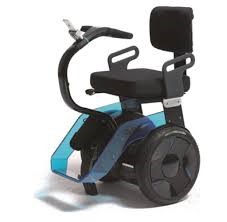
In more recent times, several seated Segway-like devices have started entering the market. These devices (such as the Nino), allow individuals with upper trunk function to drive the wheelchair by leaning forward and to brake the wheelchair by leaning back. More research is required to determine how useful and practical it would be for individuals with spinal cord injury.