
Are there restrictions or precautions for using robotic skeletons?
Author: Sharon Jang | Reviewer: Riley Louie | Published: 7 April 2021 | Updated: ~
There are certain situations where extra attention is needed to determine whether robotic exoskeletons are appropriate and safe. Consult a qualified health provider for further safety information. Robotic exoskeletons are not recommended for individuals:
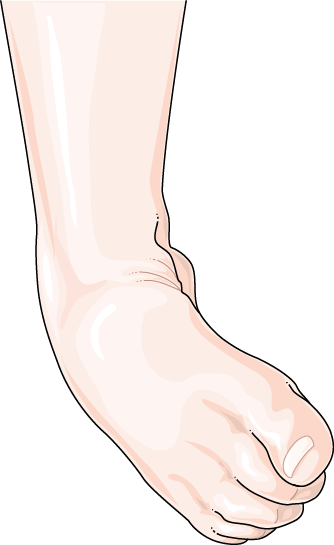
Extreme contractures are a contraindication for using exoskeletons.
- Who are unable to tolerate standing, even with an assistive device (walking frame, bracing), due to pain or other complications (autonomic dysreflexia, orthostatic hypotension).
- With severe neurological injuries (apart from SCI).
- With severe or uncontrolled spasticity.
- With osteoporosis.
- With fractures.
- With severe contractures (deformities that cause joint and muscle stiffness and limit normal or functional movement of the limbs).
Using Functional Electrical Stimulation (FES) to counter spasticityResearchers built a novel device that integrates FES into an exoskeleton to address the issue of severe spasticity affecting exoskeleton use. In this FES-exoskeleton hybrid, FES complemented the exoskeleton by stimulating tight extensor muscles to facilitate walking. The authors found that spasticity was temporarily reduced when FES was used when walking with an exoskeleton. Furthermore, it was found that the knee was more easily extended when moving from a sit-to-stand position, and the forces applied on the knee during sit-to-stand were reduced. While this (weak evidence) study provides some promise for individuals with severe spasticity to also use exoskeletons, further research is required. |