
What should I be cautious of when exercising?
Author: Sharon Jang | Reviewer: Sonja de Groot | Published: 20 April 2022 | Updated: XX October 2024

Watch SCIRE’s YouTube video explaining potential complications during exercise.
Exercise is relatively safe for individuals with SCI. However, there are some complications that, while rare, can arise.
Low blood pressure

When you first start exercising, it is common to possibly feel some nausea, or like you might pass out. This is a result of
exercise-induced (exertional) hypotension
, or a sudden drop in blood pressure due to exercise. One way to overcome this is to build up your exercise routine. When doing aerobic exercises, try a discontinuous approach: exercise for 2-3 minutes, then take a break. The idea is to slowly increase the length of exercising before you require a break, working your way up to 20-30 minutes of exercise. Once you are able to continuously exercise for 20-30 minutes, then you may consider increasing the resistance.
Autonomic Dysreflexia

Autonomic dysreflexia is a condition where blood pressure suddenly increases to dangerous levels. If this occurs, stop exercising. Sit up and try to lower your legs if possible, loosen any tight clothing, and move off of any high-pressure areas (e.g., sit bones, hands/wrists if you are using assistive grip). If symptoms do not go away, seek medical attention.
Temperature regulation

With a high level injury, temperature dysregulation, the body’s inability to control temperature, may be influenced. The ability to produce sweat can be compromised with higher levels of injury, resulting in an inability to cool down the body. In colder environments, it may be harder to warm up.
When exercising in hot or warmer environments, make sure you are drinking water consistently throughout your workout. Consider wearing looser clothing, and try to work out in an environment with ventilation, fans, or air conditioning. If you notice that you tend to overheat during exercise and are unable to sweat, you can also try carrying a spray bottle with you and spray your face down to cool off. When exercising in cooler environments, be mindful of your hands, arms, legs, and feet and make sure they aren’t getting too cold. Try dressing in layers so you can wear more if necessary, but also take layers off if you get warm.
Skin concerns
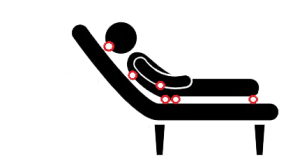
When exercising, it is important to be cautious of skin integrity, especially if you have no sensation. One area to be mindful of is the back when performing rocking or twisting motions. Rocking and twisting movements may cause the back to rub on the backrest of the wheelchair, creating a potential for skin breakdown. Another area to be mindful of is areas used with straps, such as the hands and sometimes the feet. For example, if using a grip aid for a longer duration of time to perform an activity, you may want to check for red spots that may have been caused by the straps. Ensure to check your skin after exercising for redness.
Overuse injuries

Overuse injuries occur when you exercise muscles that are already often used on a daily/frequent basis. An example of this is the shoulders, as it is used for pushing a wheelchair. To prevent overuse injury, make sure you have the correct posture when performing exercises. When working on the shoulder, try to consider alternatives to pushing your wheelchair as exercise, if possible. For example, the use of an arm bike could be an alternative to get around as they require less demand on your shoulders and arms. In addition, try to balance aerobic exercise and strength training in muscle groups prone to overuse injuries.