
What complications can develop after a spinal cord injury?
Authors: SCIRE Community Team | Reviewer: Arlene Aspinall and Tova Plashkes | Published: 17 February 2017 | Updated: ~
Many different complications can develop while in the hospital after a spinal cord injury, such as pneumonia, blood clots, and pressure sores. Preventing complications is very important during the stay in the hospital since complications can cause longer hospital stays and be life threatening.
Lung infections
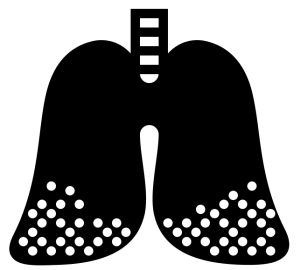
Secretions (phlegm) can build up in the lungs if a person is not able to get enough air into the lungs or has a weak cough. This increases the risk of developing lung infections like pneumonia. Getting up and moving early after injury, taking many deep breaths (sometimes with the help of a machine or special air bag), keeping hydrated and coughing regularly are the main methods of preventing lung infections.
Other techniques may also be used by the health care team to help keep lungs clear of phlegm such as:
- Suctioning involves the use of a narrow flexible tube with a small amount of suction applied to it. The tube is inserted into the airway through the mouth, nose, or breathing tube to remove phlegm.
- Assisted coughing involves physical assistance from another person and/or a machine to cause a cough to help clear the lungs.
- Physical chest treatments (chest physiotherapy) involve hands-on techniques performed by a therapist or caregiver that consist of vibrating the rib cage or tapping on the rib cage with a cupped hand, followed by assisted coughing and/or suctioning.
Blood clots
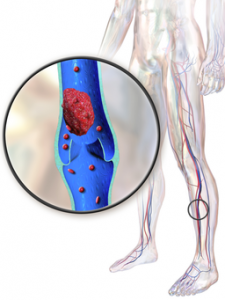
The leg is a common site for DVT.15
A blood clot that forms in the veins is called a deep vein thrombosis (or DVT). If a person is motionless for a period of time, the blood does not circulate well and can form clots as it sits in one spot. Blood clots can then break free from the veins and travel to the lungs, which can be life threatening.
Blood clot prevention usually begins within the first few days after injury. In most cases, early use of medications to prevent the clots from forming or to break down clots is the main treatment for preventing blood clots. Early movement and devices like compression stockings and calf compressors may also aid circulation.
Pressure injuries
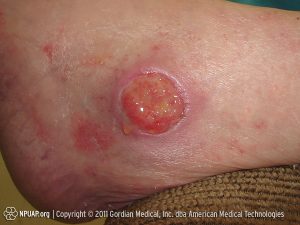
A pressure sore is a breakdown of the skin because of excess pressure and shear.16
A pressure injury (or pressure sore) is a breakdown of the skin and tissues in response to pressure and other forces. Pressure sores can be difficult to heal and are susceptible to infections. Preventing pressure sores may involve regular skin inspections, pressure relief techniques, special movement and transfer skills, good skin care, and specialized bedding and seating.
Urinary tract infections
Urinary tract infections are a common complication after SCI that involves an infection of some part of the urinary tract. This may be the kidneys, the bladder, or their connecting tubes: the ureters (connects each kidney to the bladder) or the urethra (from the bladder to the outside). Infection of the kidneys may also be referred to as pyelonephritis and infection of the bladder may be referred to as cystitis or a bladder infection. Preventing urinary tract infections involves regular bladder emptying using catheters, proper hygiene, maintaining proper hydration, and medications to prevent infections.
Sepsis
Serious infections can result from many of the complications of SCI, including urinary tract infections, pressure sores, and lung infections. Sepsis is when an infection has the potential to spread into the bloodstream and affect the whole body. The body responds to a widespread infection by triggering an exaggerated immune response which can lead to tissue damage and organ failure. Sepsis can be life threatening, and requires immediate treatment as soon as it is recognized.