
What is the immune system?
Author: Sharon Jang | Reviewers: Phillip Popovich , Katherine Mifflin | Published: 2 September 2020 | Updated: 10 January 2025
The immune system is responsible for fighting infections and preventing illness. To keep our bodies healthy, the immune system does three main things:
- Recognizes harmful germs, such as bacteria and viruses, when they enter the body,
- Kills germs and removes them from the body, and
- Fights changes in the body that may cause illness (e.g., cancer cells)
Who are the key players in the immune system?
The immune system is comprised of two main parts: the innate immune system and the adaptive (or acquired) immune system. The innate immune system refers to a non-specific line of defence (i.e., it acts against all germs in the same manner) that you are born with. It is often the first line of defense, which is made up of parts of your body that prevent germs from entering. This includes:
- The outer layer of the skin, which acts as a physical barrier to germs,
- Mucus and hair, which traps germs,
- Saliva, which rinses out germs from the mouth,
- Bodily fluids, such as stomach acid, which kills bacteria, and
- Urination and defecation, which excretes germs from the body.
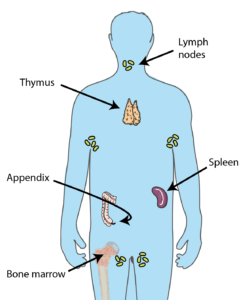
Many organs throughout the body contribute to producing cells required to keep you healthy.3
If germs manage to invade the body, the innate immune system is the first system to recognize them. The innate immune system will then trigger a general attack, such as inflammation and fever. This attack affects the entire body, and does not directly target the germ. Innate immune cells then enlist the help of the adaptive immune system.
The second line of defense involves the adaptive immune system, which initiates specific defences for each germ that enters your body. For example, the body will react differently to a virus that causes influenza versus one that causes measles. The main players in the second line of defense are various types of white blood cells. This includes: natural killer cells, which kill any cell that is not recognized as part of the body, lymphocytes, which help the body remember the invaders for the future and destroy them, and phagocytes, which help “eat” and break up invading organisms.
The cells that contribute to the first and second line of defence are produced in organs all over the body, including the bone marrow, spleen, lymph nodes, adrenal glands, tonsils, and thymus.