
What can be done to prevent urinary tract infections?
Author: SCIRE Community Team | Reviewer: Bonnie Nybo | Published: 9 November 2018 | Updated: ~ Nov 9, 2018
A number of different practices may be used to prevent UTIs. A proper bladder routine and good hygiene is the first step. Some options such as antibiotics and bacterial interference are not usually encountered as a typical part of prevention, thought there is research in these areas. Some of these are part of self-care and others involve working together with your healthcare team.
The Bladder Routine
A bladder routine is a regular schedule of bladder techniques and treatments done every day to maintain bladder function and health. To decrease the risk of a UTI, a bladder routine will take into account a number of items:
Catheterization Method
Various studies on UTI prevention in SCI have been done on different types of catheterization with most research focusing on intermittent catheterization, which is one of the most common and preferred bladder-emptying methods for the neurogenic bladder.
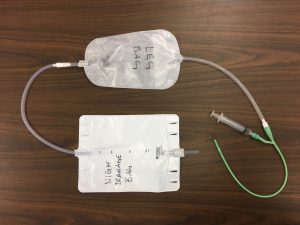
Example of an indwelling catheter. Uncoupling the line above the “leg bag” is not recommended. An optional “night drainage bag” that attaches to the “leg bag” may be attached and detached as needed.4
There is moderate evidence that intermittent catheterization carries a lower risk of UTI than both urethral indwelling or suprapubic indwelling catheters. If an indwelling catheter is required, there is moderate evidence to show that a StatLock device to secure urethral and suprapubic catheters may lead to a lower rate of UTI.
Suprapubic catheters lead to a lower rate of UTIs than urethral catheters. There is weak evidence that where intermittent catheterization may not be viable as an approach to bladder management due to socioeconomic challenges, bladder management with a suprapubic as opposed to urethral catheter may lead to a lower rate of UTI.
Maintaining closed systems with indwelling catheters is recommended practice. This means not uncoupling links in the line where the catheter is connected to the urine collection bag as to do so creates an entry route for bacteria.
Specially coated catheters
There is strong evidence that using a pre-lubricated or hydrophilic catheter for intermittent catheterization is more effective in reducing the risk of UTI or need for antibiotic treatment compared to non-coated catheters.
Catheterization Hygiene
Washing your hands thoroughly with soap and hot water before catheterization is the first step regardless of whether you use the clean technique, the sterile technique, or something in between.
| Clean Technique
More common and less expensive Often performed in the community Usually done for intermittent catheterization Requires thoroughly washed hands Intermittent catheterization is often done with a single-use sterile catheter The genital area is cleaned with soap and water
|
Sterile Technique
Less common and more expensive Often performed in the hospital/rehab centre Usually done for indwelling catheterization Requires thoroughly washed hands and sterile gloves to be worn. Intermittent catheterization is done with a single-use sterile catheter The genital area is cleaned with a disinfectant Requires a sterile catheterization kit that will include gloves, draping, an underpad, lubricant, swabs, a syringe, and a urine collection receptacle |
There is moderate evidence that intermittent catheterization using the clean technique or sterile technique is equally effective in reducing UTI risk during inpatient rehabilitation for SCI.
The use of single use catheters is recommended over multiple use catheters as there may be a lower incidence of UTI in people who use single use catheters. For those who still use multiple use catheters for intermittent catheterization, properly cleaning the catheter and allowing it to dry completely before reuse is important.
Do not apply a multiuse tube of lubricant directly to the catheter. To prevent contamination, dispense lubrication on to a sterile napkin included with the catheter, then apply it to the catheter. Alternatively, you can use a small one-time use tube of lubrication. If the catheter touches any unsterilized surfaces during the bladder routine, a new catheter must be used.
Catheterization schedule
Perform intermittent catheterization when necessary. Usually a person will catheterize four to six times a day and collect less than 500mL of urine each time. If there is more than 500mL collected, one should consider more frequent catheterizations or review their fluid intake. This reduces the risk of having an overfilled bladder which can damage the bladder and cause reflux of fluid up towards the kidneys. Both these factors increase the risk for UTI. The amount of urine left over after catheterization does not seem to play a role in UTI occurrence in individuals with SCI. However, emptying the bladder completely is desired as performing more catheterizations than required may increase UTI risk as each catheterization is an opportunity for bacteria to be introduced into the urinary tract.
Genital Hygiene
Keeping the genital and perineal area clean may reduce bacterial growth in that area that could contribute to a UTI.
This involves a bowel routine to minimize the occurrence of bowel accidents which can increase UTI risk as fecal matter may gain access to the urethra. When cleaning up after a bowel movement, wipe from front to back. Also, preventing bowel accidents and bladder leaks will keep the area dry and help keep the skin healthy.
Women should avoid using douches and similar feminine hygiene products.
Individuals who are able to urinate should empty their bladder after sexual activity. For those who catheterize, clean the genital and perineal area after sexual activity.
Fluid Intake and Diet
Research in the general population suggests that adequate hydration may contribute to the prevention of UTIs. There is no SCI specific research investigating the relationship between water intake and UTI risk.

What is known is that dehydration can have numerous short and long-term negative effects on one’s physical and mental health Therefore, (unless directed by your physician) decreasing fluid intake for the convenience of less catheterizations is unwise if doing so dehydrates you.
Listen to Liander speak about how he manages his daily water intake.
How much water do you need to prevent UTIs?
While there is some evidence that adequate hydration prevents UTIs, there is no guideline for how much is adequate. Even research in the general population for what constitutes adequate hydration is an unsettled question.
Based on the best evidence so far, guidelines for the general population indicate that adequate intake of water is between 2.2 Litres for women to 2.9 Litres for men. This includes water from all beverages and food. We get between ½ to 1 litre of water from the food we eat.
How do these guidelines change for individuals with SCI? It has been suggested that individuals with neurogenic bowel dysfunction require additional fluid compared to other people. For those who use intermittent catheterization 2 Litres per day is recommended. For those who have indwelling catheters, 3 Litres per day is recommended.
One way to easily gauge your hydration is to look at your urine colour. While no precise relationship between urine color and hydration level exists, dehydration creates concentrated urine which is darker in colour while adequate hydration usually yields light coloured urine, so aim to consistently produce light coloured urine. Note that diet, vitamin supplements, and medications may affect the colour to your urine independent of your hydration.
What should you drink to prevent UTI?

There is no SCI specific information regarding the role of choice of fluids in UTI prevention. There is also very little research regarding the role of choice of fluids in UTI prevention in the general population. From an overall health perspective, the optimal amount of soda and alcohol is none. Juices and blended drinks (frappucchino, etc) are best avoided because of the high amount of sugar and/or calories. If you are drinking coffee and tea for its health benefits, consider omitting dairy products from the beverage as milk blocks the absorption of phytonutrients into the body. Caffeinated beverages like coffee and tea can have a diuretic effect in people not used to drinking them, and this will need to be accounted for in how it may affect one’s catheterization schedule. Also, alcohol has a diuretic effect and hard alcohol has an additional dehydrating effect which will increase water requirements.

Consider that what you eat can also affect your hydration levels. Whole foods like fruits and vegetables have high water content and will increase your hydration level more than processed foods. For information on cranberries for prevention of UTIs in SCI, see the oral antiseptic section below.
Finally, while there is no SCI specific information on these topics,
there is some evidence that compounds in green tea, which are
protective against E. coli that causes UTIs, make their way to the
bladder.
Physical exercise
Based on one study with moderate evidence, regular moderate physical activity may prevent UTI following SCI. This may be due to strengthening of the immune system, one of the benefits of regular exercise.
Antibiotics as prevention
Certain antibiotics have been investigated for their role in preventing UTIs in SCI. However, there is evidence that taking antibiotics as a preventive measure cause an increase in antimicrobial resistant bacteria. With increasing antibiotic resistance becoming a major public health issue over the past decade, non-antibiotic strategies are recommended before considering antibiotics as a UTI prevention tool.
There is moderate evidence that ciprofloxacin, but not trimethoprim/sulfamethoxazole, may be an appropriate antibiotic for UTI prevention. There is weak evidence from one study which found that customizing therapy to the SCI individual and alternating between two antibiotics on a weekly basis is helpful in UTI prevention.
Antiseptics
Antiseptics rid bacteria differently than antibiotics. Many factors play a role in determining the effectiveness of antiseptics for UTI prevention such as the specific antiseptic, whether they are used in combination, and the methods of delivery. Antiseptics may be used during body washing, bladder irrigation, or by mouth in tablet form as described in more detail below.
Oral antiseptics

Cranberries contain a substance that reduces the ability of
E. coli
bacteria to initially stick to the wall of the bladder. There is conflicting evidence for the effectiveness of cranberry products in preventing UTI in patients with
due to SCI. It is worth noting that cranberry is relatively high in oxalate, a chemical that may raise the risk of kidney stones in some people. Also, cranberry may increase the risk of bleeding for those on anticoagulant medication like Warfarin.

D-mannose
is a naturally occurring sugar similar to glucose. Only small amounts of d-mannose are used by the body and the rest is sent to the bladder to be excreted. Once in the bladder, D-mannose is believed to dislodge bacteria from the bladder wall. One study of able-bodied women and another in individuals with multiple sclerosis showed that D-mannose supplementation reduced UTI incidence. However, no research is yet published regarding D-Mannose and UTI incidence in individuals with spinal cord injury.
Dietary supplementation with vitamin C (ascorbic acid) is thought to reduce UTIs by increasing urine acidity. However, no clinical studies indicate that vitamin C improves symptoms or UTI incidence.
Moderate evidence from one study showed that an oral form of antiseptic known as methenamine was not effective for UTI prevention when used alone or in combination with cranberry.
Body washing
Moderate evidence from one study suggests that daily body washing with the application of chlorhexidine cream to the penis after every catheterization is more effective in reducing bacteria in the urine than standard soap, which may be helpful for UTI prevention.
Bladder irrigation
Antiseptics can be used to flush out the bladder through a process called bladder irrigation. However, only certain antiseptics have been shown to be effective in preventing UTIs, based on moderate evidence:
-
- 5% hemiacidrin solution combined with oral methenamine
- Trisdine
- Kanamycin-colistin
Other agents delivered via bladder irrigation that are not effective in UTI prevention, based on moderate evidence or weak evidence, include:
-
- Neomycin/polymyxin
- Acetic acid
- Ascorbic acid
- Phosphate supplementation
Bacterial interference
Bacterial interference involves introducing harmless bacteria (usually a safe strain of E. coli) into the bladder to compete with and replace infection-causing bacteria. This is done via intravescical installation where the bacteria are pumped into the bladder via catheter. Although effectiveness depends on the specific type of bacteria used, there is moderate evidence that this method is useful for preventing UTIs. There is no evidence for the use of oral probiotics for the prevention of UTI in SCI.
Botulinum toxin injections
There is weak evidence from one study that botulinum toxin injected into the detrusor results in fewer UTIs. It is thought that this is a result of decreased detrusor pressure.
Electrical Stimulation
There is weak evidence showing that sacral anterior root stimulation achieved via an implanted electrical device may be associated with reduced UTIs. In most cases this was accompanied with posterior sacral rhizotomy.
There is moderate evidence from one study which shows that sacral nerve stimulation within the first half-year after injury results in improvements in urinary tract issues. These improvements included prevention of detrusor overactivity and urinary incontinence, normal bladder capacity, and reduced UTI rate. In this less invasive intervention, there was no accompanying rhizotomy.