What is the equipment at the bedside for?
Authors: SCIRE Community Team | Reviewer: Arlene Aspinall and Tova Plashkes | Published: 17 February 2017 | Updated: ~

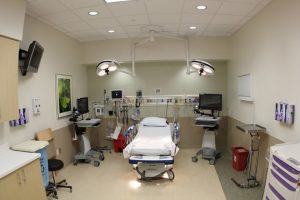
There are many different pieces of equipment and machines that may be present at the bedside and attached to the body in the hospital. These are used to help monitor body functions and manage health.
Machines and Equipment
Mechanical ventilator
: Mechanical ventilation provides breathing support for people who have difficulty breathing on their own. It is a large machine with buttons, a screen showing the types of breaths being given, and tubes that lead into the airways through the mouth or neck (tracheostomy).
Assisted cough machine
: An assisted cough machine is used to support coughing to help fill the lungs with air and clear phlegm from the lungs. Assisted cough machines are portable machines that attach to a face mask or breathing tube to assist in filling the lungs and coughing using changes in air pressure.
Heart rate, blood oxygenation, and blood pressure monitors
: Small devices may be clamped onto the finger, ear, or toe to monitor the amount of oxygen in the blood and heart rate. An inflatable cuff around the arm is used to monitor blood pressure.

Electrocardiogram (ECG) monitoring:
Electrocardiograms or ECGs are used to measure the rate and rhythm of the heart in greater detail. ECG involves the use of a number of small sticky pads which are attached at various points on the chest and body. These are connected via electrical leads to a monitor that displays the heart rhythms.
Invasive monitoring equipment:
Tubes may be inserted through catheters into the major blood vessels and heart to continuously and accurately measure pressures within the blood vessels and heart. These very small tubes are inserted in the neck, arms, or wrist and threaded into the blood vessel. They are then connected to monitors that display the information gathered.
Intravenous pumps
: Machines that attach to the intravenous bags and tubes pump the fluids and medications through the tube at a set rate. In the intensive care unit, there may be many of these at the bedside, each for a different medication.
Braces and
orthoses
: While the injury is healing, the spine may be stabilized using braces and orthoses. Cervical spine injuries may have a rigid neck collar or a metal halo brace. A halo brace is a head band that is held in place on the head by pins in the skull and attached to a stiff vest by metal rods. Thoracic and lumbar spine injuries may have bracing of the back using a back brace or plaster cast, or may have a Sternal Occipital Mandibular Immobilizer (SOMI) brace, which stabilizes from under the chin and behind the back of the head to a vest.
Other equipment
: There are often many pieces of equipment in the room which you may not recognize. Ask your healthcare team about anything you are wondering about.
Tubes and Bags
Intravenous (IV) tubes:
In the hospital, fluids and medication are often given through an intravenous (IV) line, which is a tube connected from a bag of fluid directly into a vein. Sometimes fluids are given through larger blood vessels through central venous catheters in the arm, neck or chest. Medications can also be given through an IV.
Feeding tube:
A feeding tube may be used to deliver nutrition. This tube may go into the body through the nose, stomach, or small intestine.
Urine bag and catheter:
A urinary catheter is a tube that is inserted into the urethra or placed over the genitals in men (a
condom catheter
) to collect urine. This is important to maintain hygiene and prevent pressure sores. The bag where the urine is collected is hung on the bed while in bed but can also be attached to the leg in a more discrete manner when moving around.
Suction tube:
A tube connected to suction at the bedside or attached to breathing tubes is used to suction phlegm out of the airway.
Oxygen mask, nasal prongs, or oxygen tube:
Oxygen may be given through a face mask, nasal prongs, or a breathing tube. This tube is usually connected to an oxygen outlet on the wall or an oxygen tank.
Chest tube:
For injuries or surgeries in the chest or thoracic region, a tube may be placed into the chest to drain excess fluid (such as blood or pus) or air that is pressing on the lungs. Drainage allows the lungs to heal and re-expand. The chest tube is attached to a sealed container that is placed below the level of the chest (usually on the ground for safety) to collect the drainage.
Pain pump:
Pain medications may be given through a machine at the bedside that administers pain medications at regular intervals or as needed. This is often called a patient-controlled analgesia or PCA pump, because the patient can press a button to give the pain medications when they need it. Pain medications may also be given by mouth, applied to the skin, or through other methods.