
What can be done to prevent pressure injuries?
Author: SCIRE Community Team | Reviewer: Susan Andrews | Published: 3 November 2017 | Updated: ~
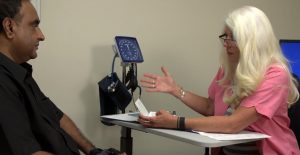
Your healthcare provider can provide education on pressure injury prevention and skin care.8
The most important part of managing pressure injuries is preventing them from happening in the first place. Many different techniques may be used to prevent pressure injuries. Some of these are a part of self-care and others involve working together with your health team.
Learning how to prevent pressure injuries
Early on in your care, your health providers will speak to you about how to prevent pressure injuries. This may be a part of one-on-one care or as a part of a group education class. Prevention education is a very important part of reducing risk. You will learn how to identify skin concerns early on and the best techniques for you to keep your skin healthy.
Maintaining good skin care
Regular skin care is an important part of preventing pressure injuries. Many of these techniques you will learn as a part of skincare education.
Regular skin checks
Checking the skin for changes in color and texture is important to recognize areas of risk and to identify any changes early. The main areas to check are bony areas, like the sit bones, tail bone, side of the hips, and heels. A mirror or assistance from a caregiver may be needed to check some areas. Any areas of redness, bruising, or injury should be discussed with your health providers immediately. Skin checks are recommended once or twice daily or after activities like prolonged bed rest or trying new equipment.
Listen to Peter describe how he regularly checks his elbows to maintain good skin health.
Keeping the skin healthy
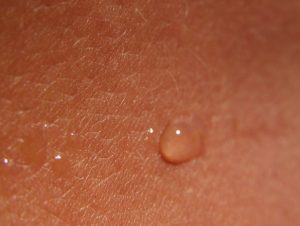
Regular skin care should be done using a gentle pH-balanced skin cleanser and moisturizer. The skin should always be treated gently and not rubbed or massaged forcefully The skin should be kept dry using loose fitting clothes made of light weight fabrics and protecting the skin from excess moisture. Avoid clothing with thick seams or pockets like denim that can contribute to tissue damage.
Regular pressure relief
Pressure relief techniques are positions and movements that remove pressure and give the tissues a chance to regain proper blood flow. You should discuss with your health providers about which positions are best for you and how often and for how long they should be done for. Keep in mind that moving into pressure relieving positions should not involve pulling or shearing of the skin while re-positioning.
Depending on your level of injury, some people are able to re-position themselves or need a small amount of assistance. People with higher level SCI can use the functions of their wheelchairs or equipment to weight shift or may rely more on caregivers and family to provide assistance.
Pressure relief techniques
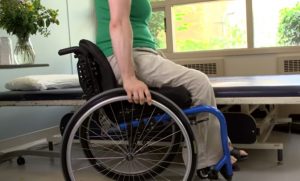
Pressure can be relieved by lifting the buttocks off the seat.10
- For power wheelchair users, tilting or reclining the chair backwards for a period of time
- For manual wheelchair users, techniques such as leaning forward and propping the elbows onto the knees, lifting the buttocks off the seat by straightening your arms on the armrests, or leaning to one side
- When in bed, techniques such as turning every 2-3 hours, placing pillows between knees and behind the back when lying on your side, and using a suitable pressure relieving surface
This is not a complete or instructive list of pressure relief techniques. Speak to your health provider for detailed instructions on how to perform pressure relief techniques. How-to instructions for some techniques are illustrated on the Spinal Cord Essentials website.
Pressure relief is usually recommended every 15 to 30 minutes to replenish blood flow to vulnerable areas of the skin and held for at least 1 to 2 minutes.
Pressure mapping
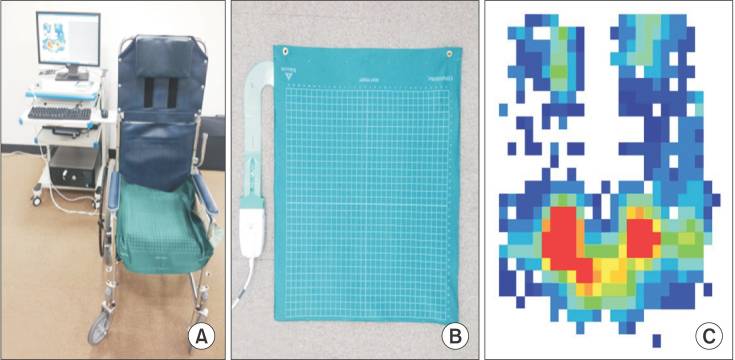
Pressure map placed on a wheelchair (left), flexible pressure map (center), and diagram of pressure of a person’s buttocks in sitting (right). Areas of pressure are indicated from high pressures in red (around the sit bones) to lower pressures in blue.11
Pressure mapping is a technique that involves the use of a pressure-sensitive mat and computer system to identify areas of increased pressure. Pressure mapping may help your health provider make recommendations about reducing pressure, including selecting appropriate equipment and finding out which pressure relief positions work best for you.
Using appropriate equipment and seating
Appropriately fitted equipment like wheelchairs, cushions, and bedding can help to maintain healthy skin. During rehabilitation, you may work with your health providers or attend a special clinic where you receive advice on selecting equipment and the correct use of the equipment.
The team will recommend seat cushions, backrests, commodes, and mattresses to help manage pressure in at-risk areas. Regular check-ins at the clinic may also be needed. Most equipment needs to be reviewed and replaced periodically. For example a padded raised toilet seat that has rips or is worn out can be a cause of a pressure injury.
Keeping a healthy lifestyle
Adopting a healthy diet, exercising regularly, and avoiding smoking are simple steps to help maintain healthy skin.
Nutrition
A healthy diet with enough fluids, calories, and protein provides the nutrients and vitamins needed to maintain healthy skin. It also helps in maintaining a healthy body weight. A dietician can help you learn how to eat well to prevent pressure injuries and can advise you on the nutrition you need for healing should you develop a pressure injury.
Avoiding smoking
Smoking is a risk factor for pressure injuries because smoking prevents oxygen from reaching the tissues and worsens overall health.
Exercising regularly
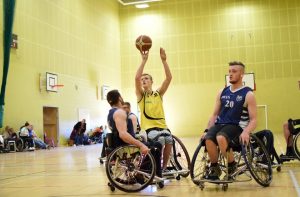
Exercise helps to increase circulation (which carries oxygen and nutrients throughout the body) and maintain overall health. Exercise may also help to maintain muscle bulk which creates padding between the skin and bone.
Electrical stimulation
Although it may seem strange, electrical stimulation is a treatment which may help to prevent pressure injuries. Electrical stimulation on its own can help to increase blood flow and oxygen supply to the body tissues. Electrical stimulation during exercise (functional electrical stimulation) may help to maintain muscle mass that pads areas under the skin.
