
What kinds of cushions are there?
Author: Sharon Jang | Reviewer: Emma M. Smith | Published: 25 May 2020 | Updated: ~
There are five common types of cushion material: foam, gel, air, honeycomb urethane, and alternating pressure.
Foam cushions
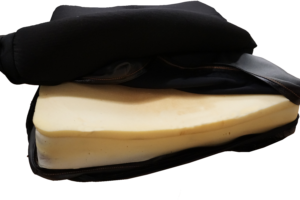
Foam cushions require protection from getting wet. The cushion above features an extra lining under the cushion cover to help keep it dry.6
Foam cushions are a cheaper option, and come in a variety of densities, ranging from soft memory foam to higher density foam. Foam is able to adapt to shapes, is low maintenance, and can provide support while spreading sitting pressures. One downside to using foam is that it wears out and loses its shape quickly. In addition, foam cushions are only able to provide a limited amount of pressure relief and comfort. Foam cushions also must be protected from getting wet. The use of foam cushions is recommended for those with basic sitting needs.
Gel cushions
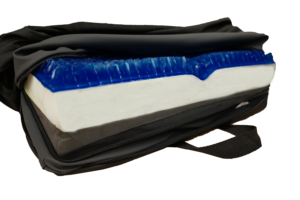
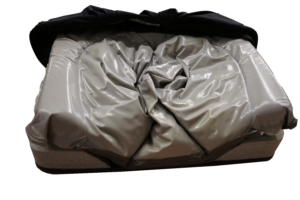
A variety of gel cushions exist. These include a gel matrix (left) and a gel cushion (right).7
There are different types of gel cushions including gel matrix and gel cushions. Gel cushions aim to provide seating comfort by using gel placed on top of a layer of supportive foam. Gel cushions are able to relieve pressure points and distribute pressure over a larger area, while providing a stable surface to support positioning. They may also help counter effects of high temperatures with its cooling properties. Some drawbacks to using a gel cushion include heavier weight and a lack of shock absorption. Gel cushions also have the potential to “bottom out” (when all the gel is pushed aside, massaging may be required to redistribute the gel), and a potential for leaks.
Air cushions
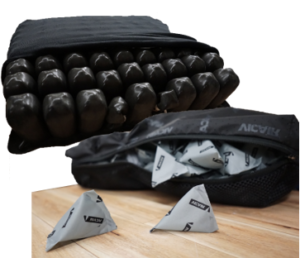
Air cushions are often comprised of a group of small air-filled cells. In some air cushions, the cells are interconnected, while other versions contain multiple separate air sacs contained within a cushion cover. These cells support the weight of the user, and spread out the pressure of sitting through shifting air to the surrounding cells. These cushions are customizable in regards to the number of cells and the amount of air each cell is able to hold. If the cells are interconnected, the amount of air in the cushions can be adjusted using a pump. Moderate evidence has suggested that the use of air cushions can reduce the risk of a pressure sore through reducing the amount of pressure produced while sitting and promotion of air flow. Furthermore, air cushions are generally waterproof. Although these cushions are great for providing pressure distribution, they are not optimal for stability and postural support. In addition, they may be considered high maintenance as the pressure of the cushion has to be checked frequently and manual pumping of air into the cushion is required.
Honeycomb urethane cushions
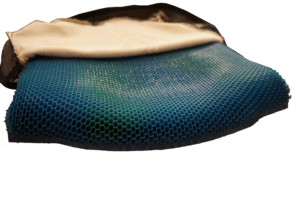
These light-weight durable cushions resemble a honeycomb in that they are composed of multiple open cells. These cells are able to distribute pressure evenly while avoiding the risk of being punctured. Air flow is also promoted throughout the open cells to prevent skin breakdown. As these cushions are made out of urethane, a material that resembles rubber, they also provide good shock absorbance. However, compared to other cushions, they provide moderate positioning capabilities and are not modifiable in shape.
Alternating pressure cushions
Alternating pressure cushions consist of multiple air bladders (similar to an air cushion) with an added battery-operated microprocessor that controls the amount of air in each part of the cushion. Every 4-6 minutes, the air in each segment of the cushion alternates (i.e., inflates or deflates) to help relieve pressure of the users’ bottom. This cushion is suitable for individuals who are unable to effectively relieve seated pressure. There has been weak evidence suggesting that alternating pressure cushions have provide good user satisfaction and comfort. Some negatives for this cushion include its high cost, heavy weight (as it requires a pump and a motor), and susceptibility to punctures.
While cushion marketing may promote a reduction in sitting pressure, more research is required to determine whether reducing the pressure on the sit bones or decreasing risk factors will prevent pressure ulcers. Pressure mapping is one technique that may be used to help determine the areas that are prone to pressure sore.
Custom Contour CushionsThese cushions are made custom to the shape of your buttock in an attempt to reduce pressure. Often, custom contour cushions are made with a combination of the aforementioned materials, accounting for the high pressure areas identified by pressure mapping. There is moderate research evidence that suggests that custom contoured cushions may create a safe sitting surface for individuals with SCI through the ability to redistribute sitting pressures. There is also weak evidence that using a custom contour cushion may help increase sitting stability and posture. If using a custom contour cushion, avoid getting the cushion wet as it may deform, and be careful to properly position yourself on the cushion as there is only one position that is optimal for comfort and pressure distribution. |
