What mobility and independent living activities are done in rehab?
Author: SCIRE Community Team | Reviewer: Shannon Sproule | Published: 25 September 2017 | Updated: ~
There are a number of mobility and independent living skills that play an important role in everyday life. These skills may be practiced during physiotherapy, occupational therapy, and other daily activities in rehabilitation.
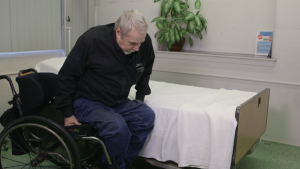
Transferring from a bed to a wheelchair.9
Bed mobility
is the ability to move between different positions while lying in bed. This includes skills like turning while in bed or moving into a sitting position at the edge of the bed.
Sitting balance
is an important part of many other skills like transfers, getting up to standing, and wheelchair skills. It may be worked on specifically or incorporated into other exercises.
Transfers
are techniques for safely moving between different positions and surfaces. For example, moving from a bed to a wheelchair is a type of transfer. Transfers may also involve the use of mechanical lifts, transfer boards, and the direction of caregivers.
Selecting a wheelchair and other equipment
is an important part of rehabilitation. Therapists work with each person to select a wheelchair based on their needs. It should be properly fitted to avoid
pressure sores
, ensure comfort, maintain posture, function, and prevent complications. Other equipment like beds, mattresses, and devices for toileting and bathing are also important for independent living.
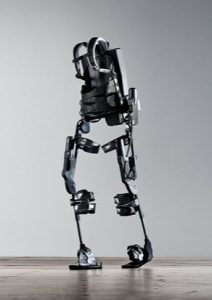
A robotic exoskeleton used for walking.10
Wheelchair skills
may include a variety of different techniques such as going up sidewalk curbs safely and opening doors. Wheelchair skills are usually taught one-on-one or in class.
Walking skills
may be practiced in rehabilitation. This may involve a variety of different strategies, which usually progress from standing to stepping to walking. It may also involve strengthening exercises, assistive devices like canes, walkers and parallel bars, and braces and orthotics. Some facilities use special equipment such as body weight supported treadmill training and
robotic exoskeletons
.
Resistance (strength) training
may involve the use of pulleys, free weights, body weight, and exercise bands. People who have greater weakness may also use slings, springs or pool exercises (
hydrotherapy
) to help build strength during therapy, group classes, or on their own.
Aerobic exercise
is exercise that trains the heart, lungs, circulatory system through repetitive and movements for a long time. Aerobic exercise is a very important part of maintaining
cardiovascular fitness
. Aerobic exercise in rehabilitation may involve activities like arm cycling,
functional electrical stimulation
cycling and supported walking using parallel bars or body-weight support.
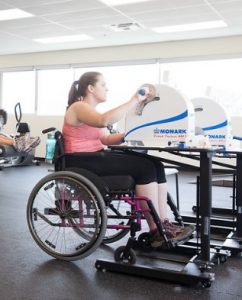
A person with SCI arm cycling.11
Electrical stimulation
, including functional electrical stimulation, can be used to activate muscles for exercise and strengthening. Stepping, cycling, reaching, hand to mouth, or grasping exercises are common functional activities done together with electrical stimulation.
Activities of daily living
are self-care tasks like bathing, toileting, dressing, feeding, and grooming. For many people with SCI, new or modified techniques for doing daily tasks may be needed. This may involve learning how to use new techniques, special equipment, or learning how to direct caregivers on how to do these tasks.